Review of Dracula, Hartford Stage
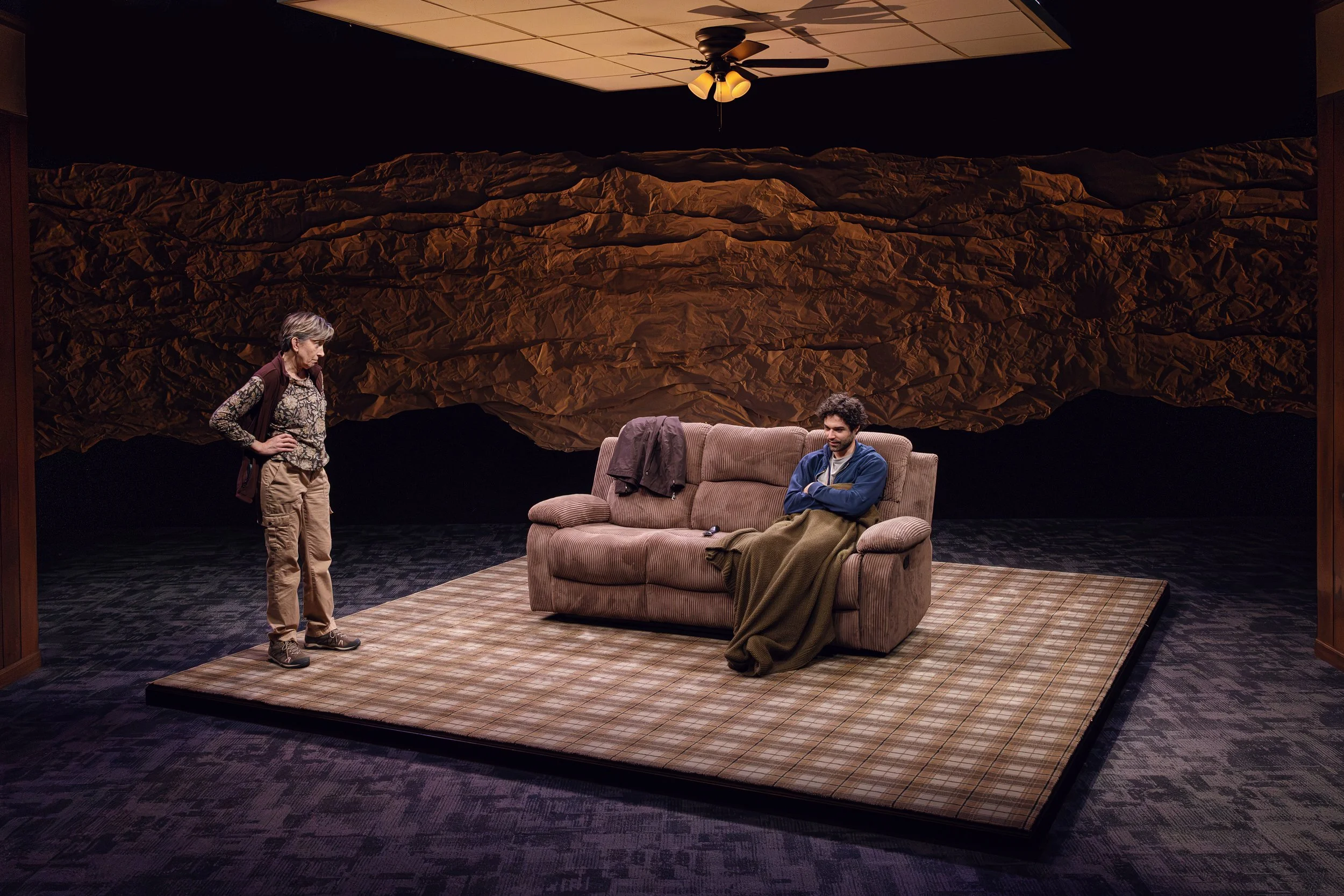
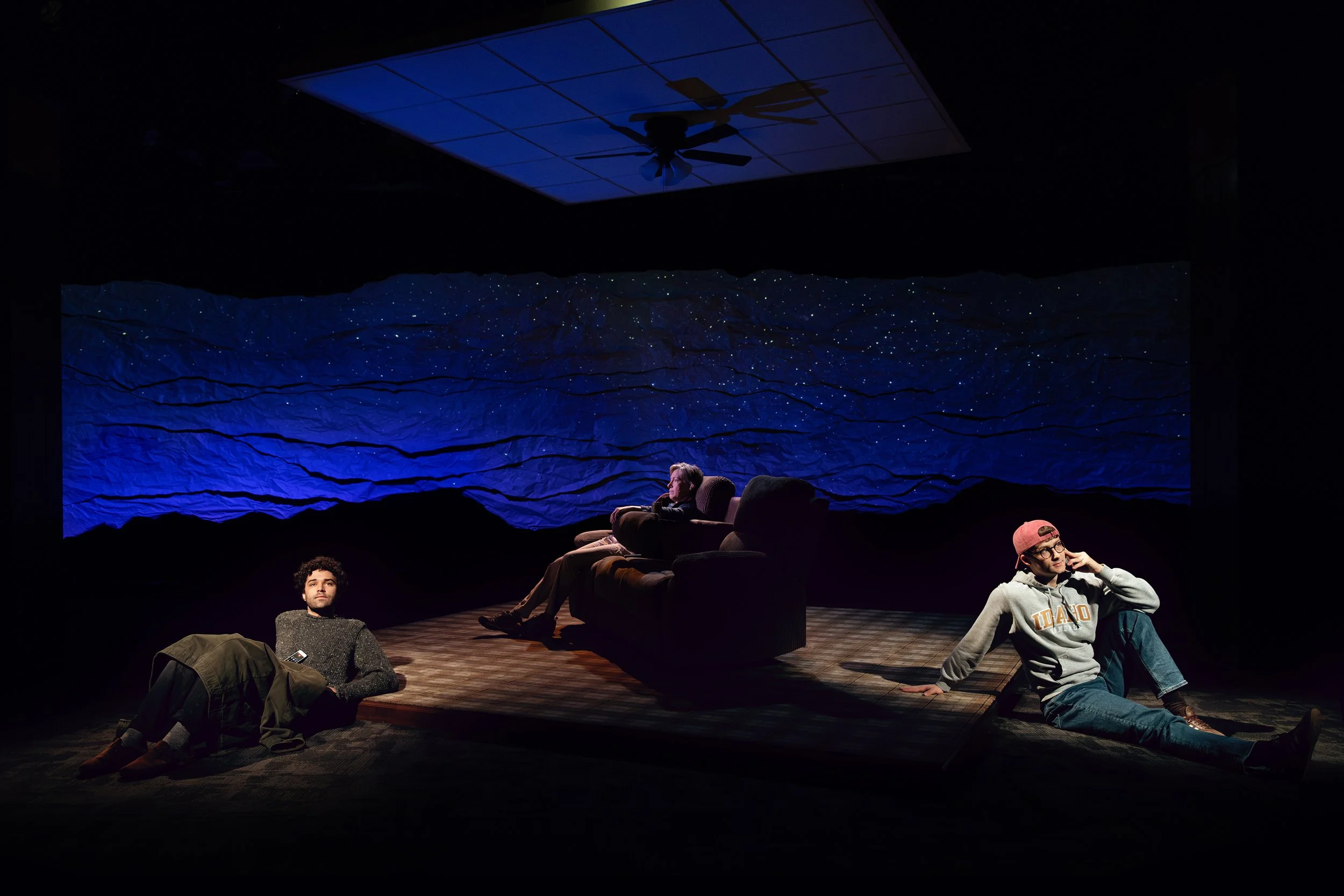
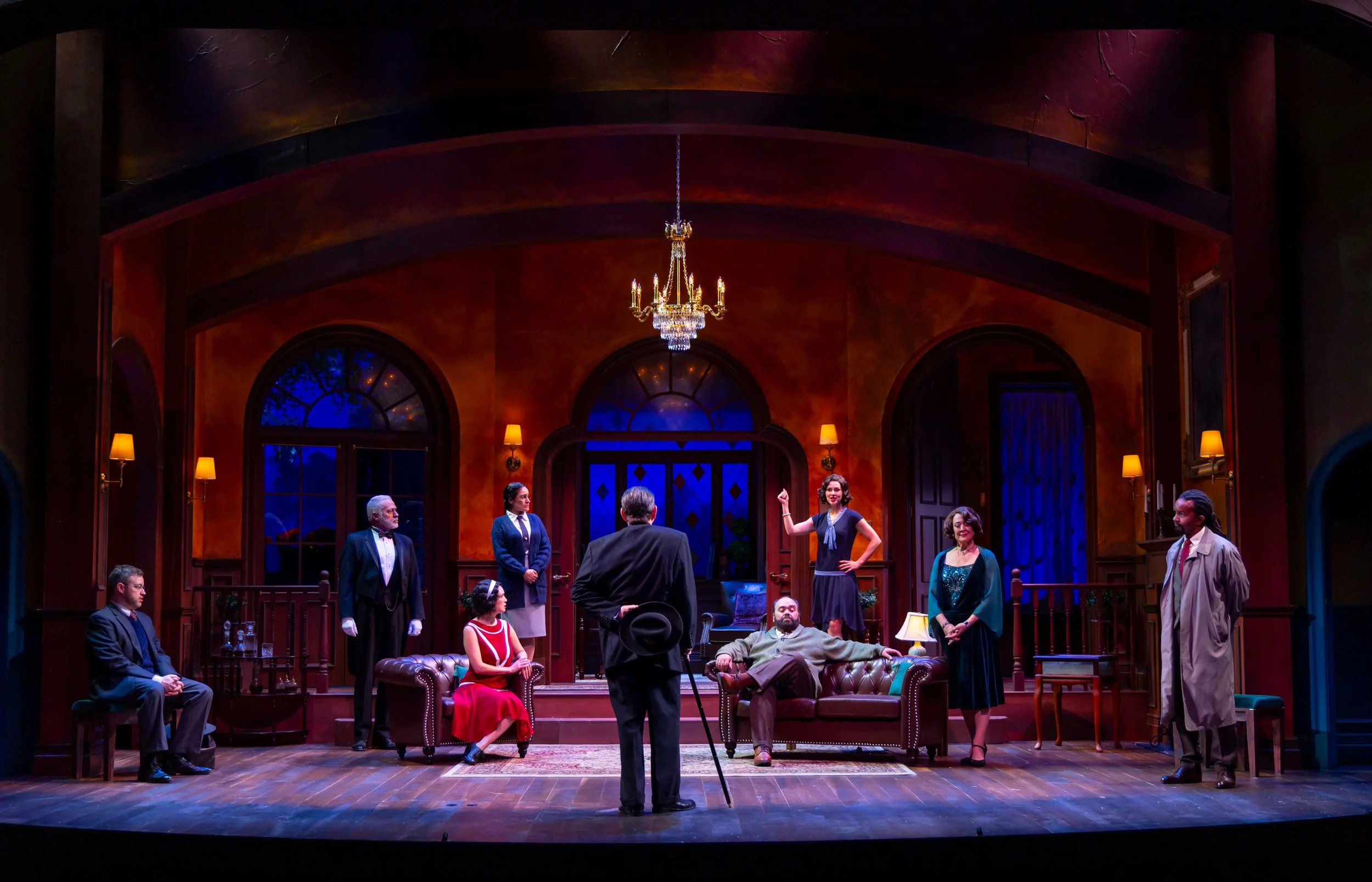
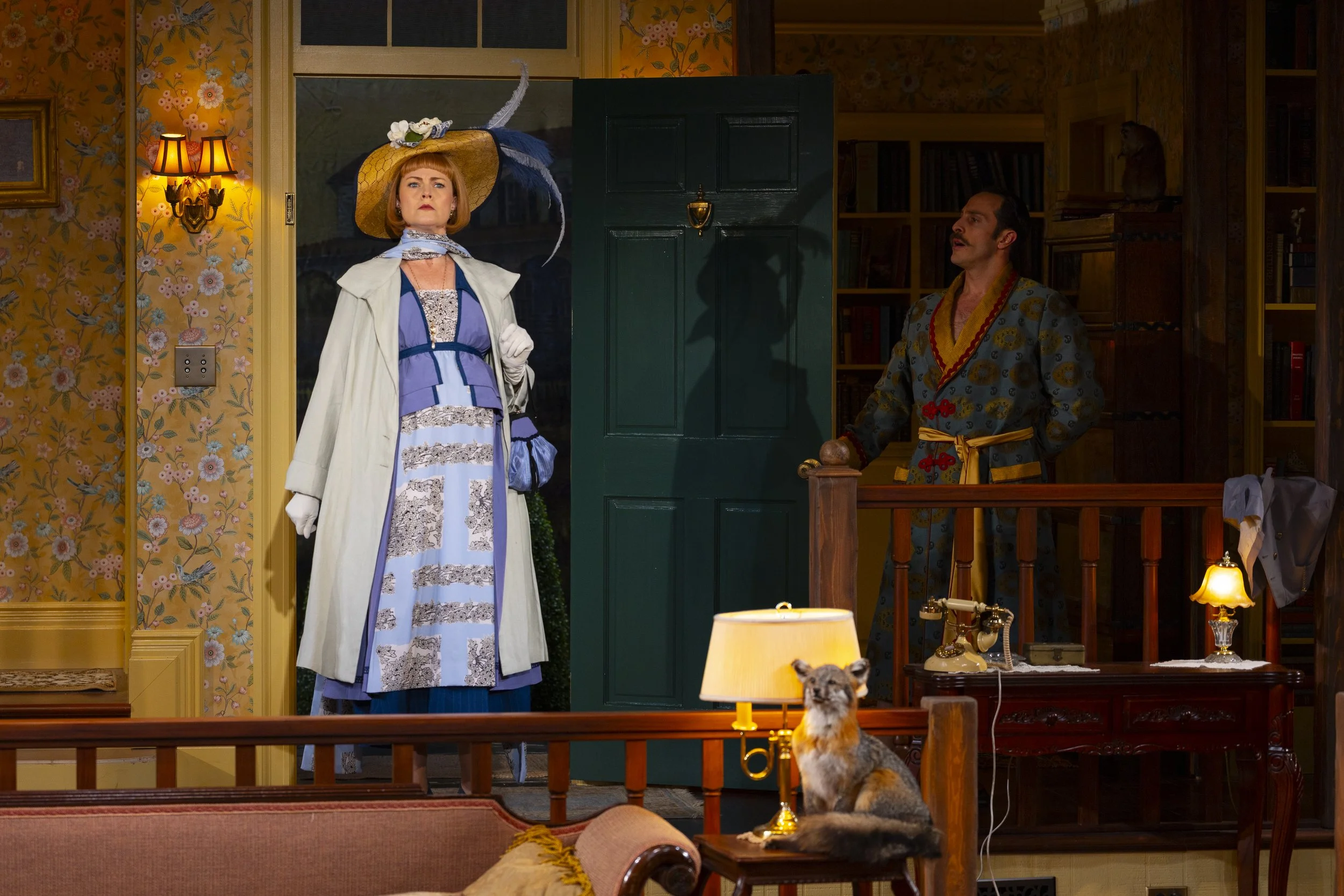
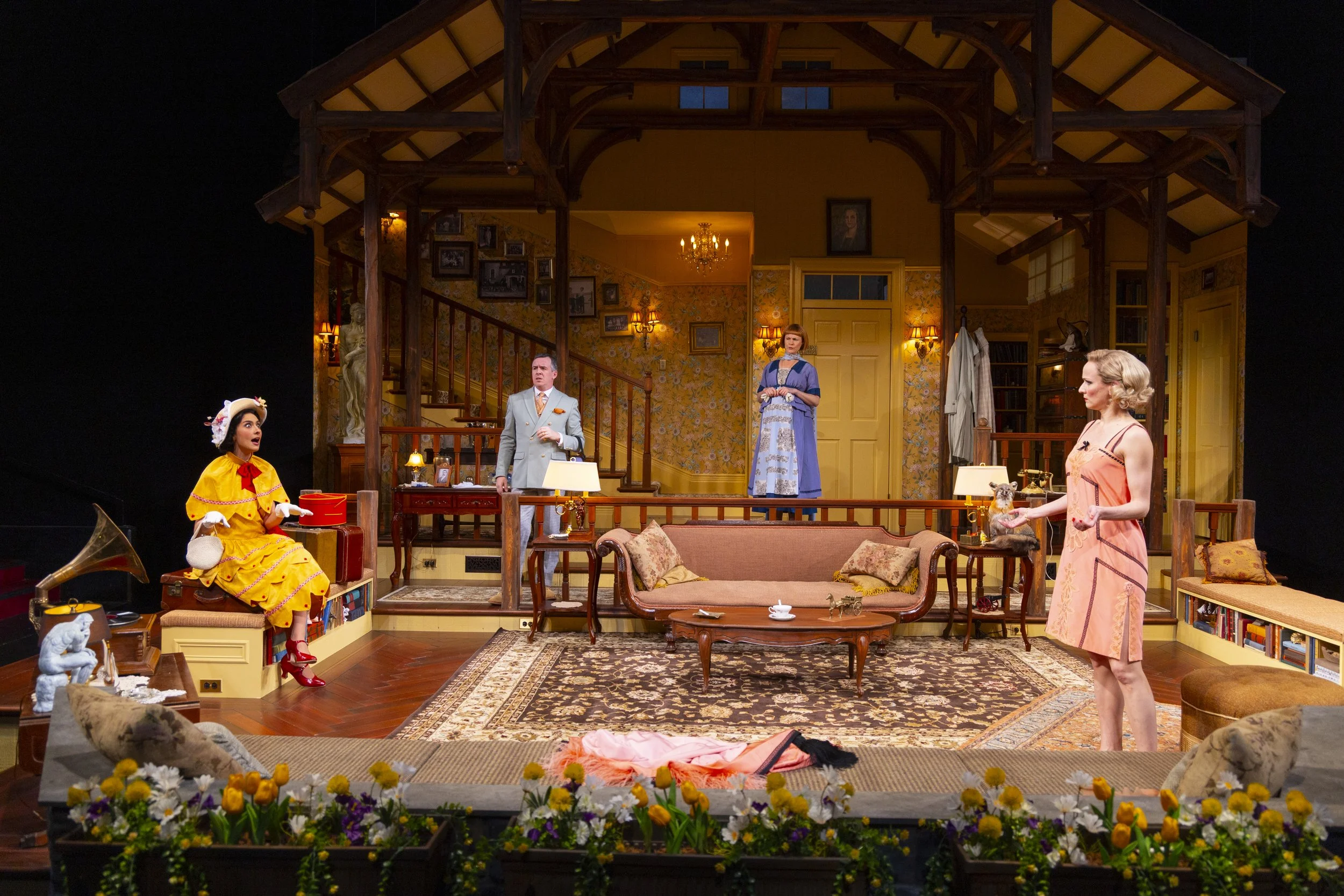
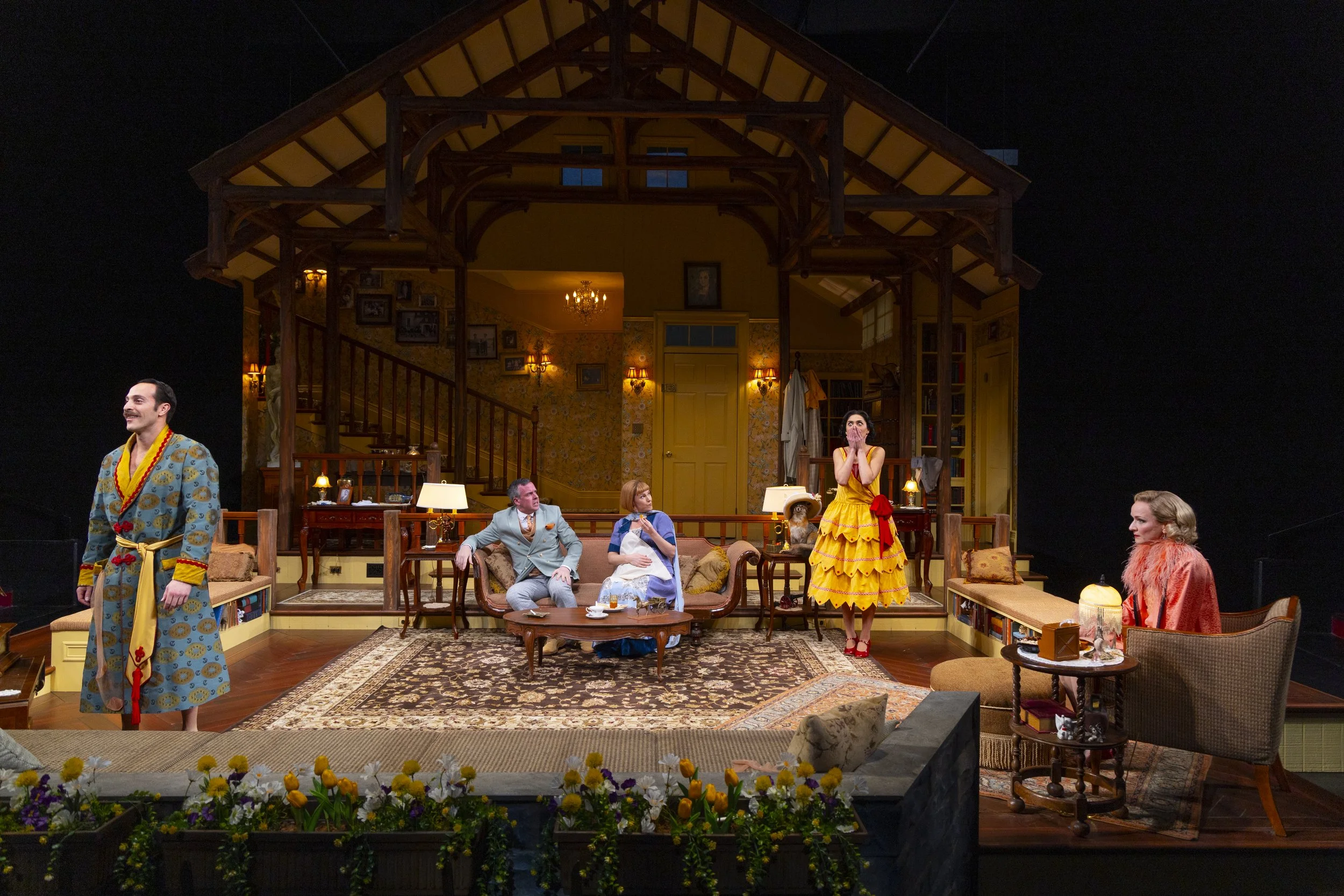
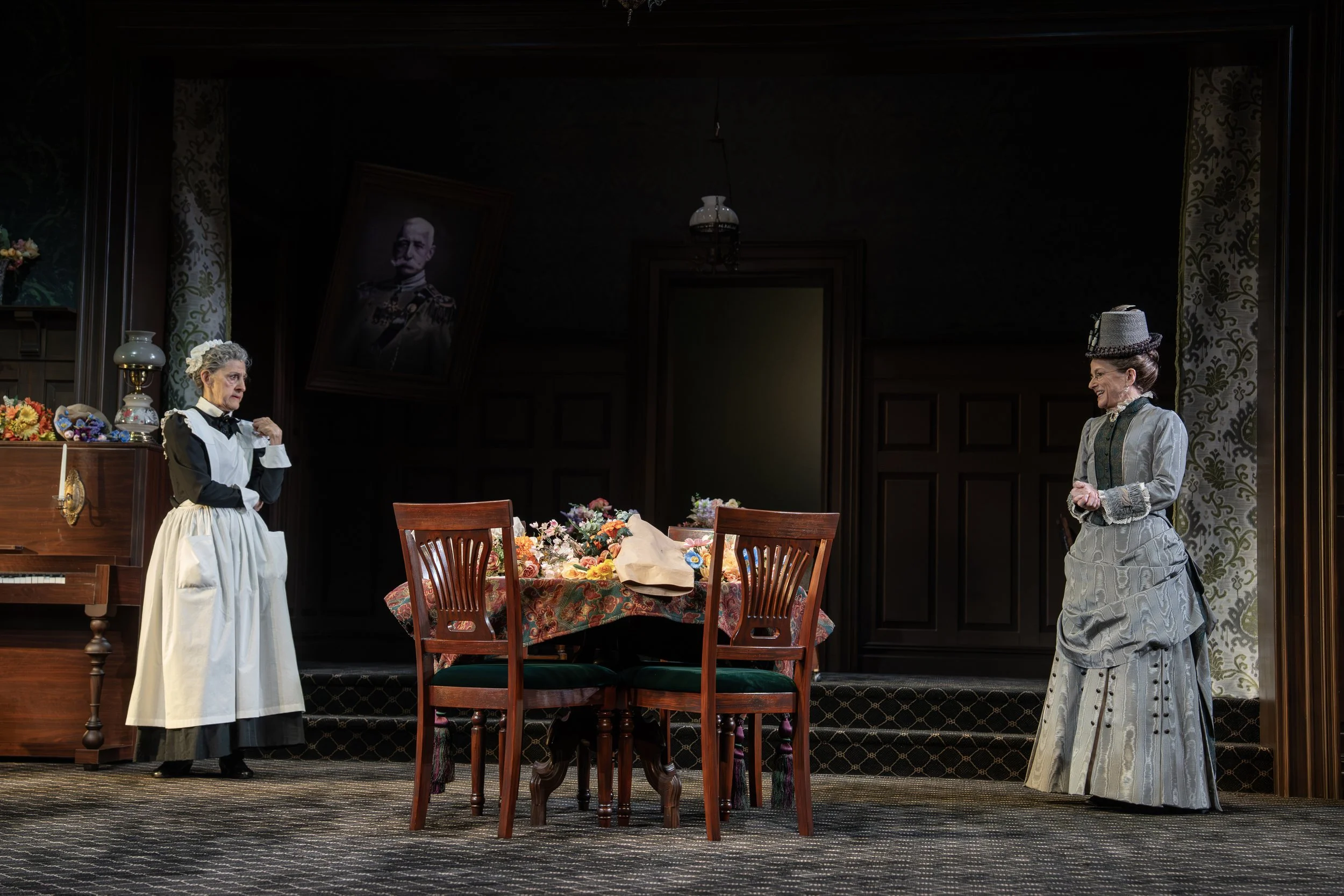
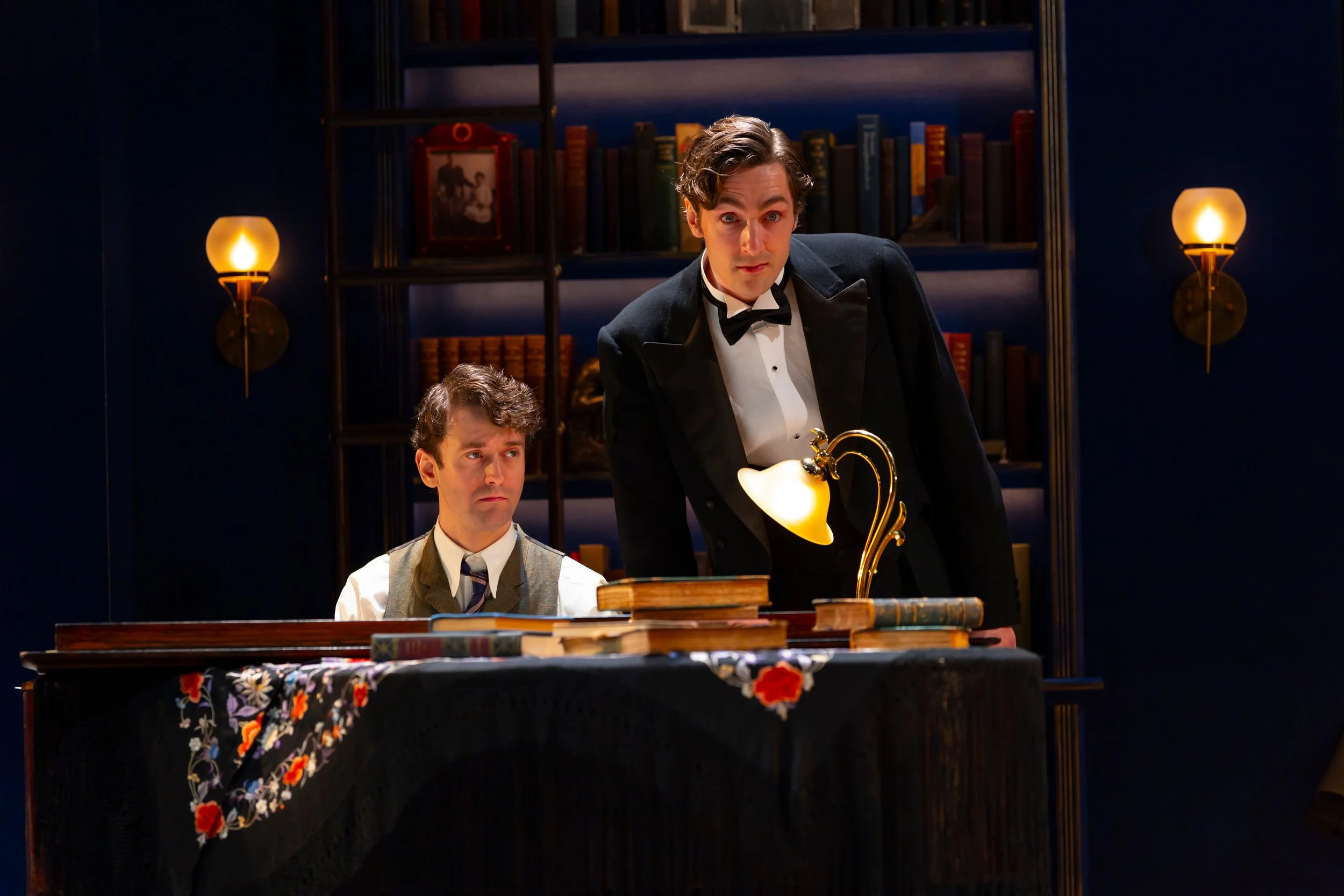
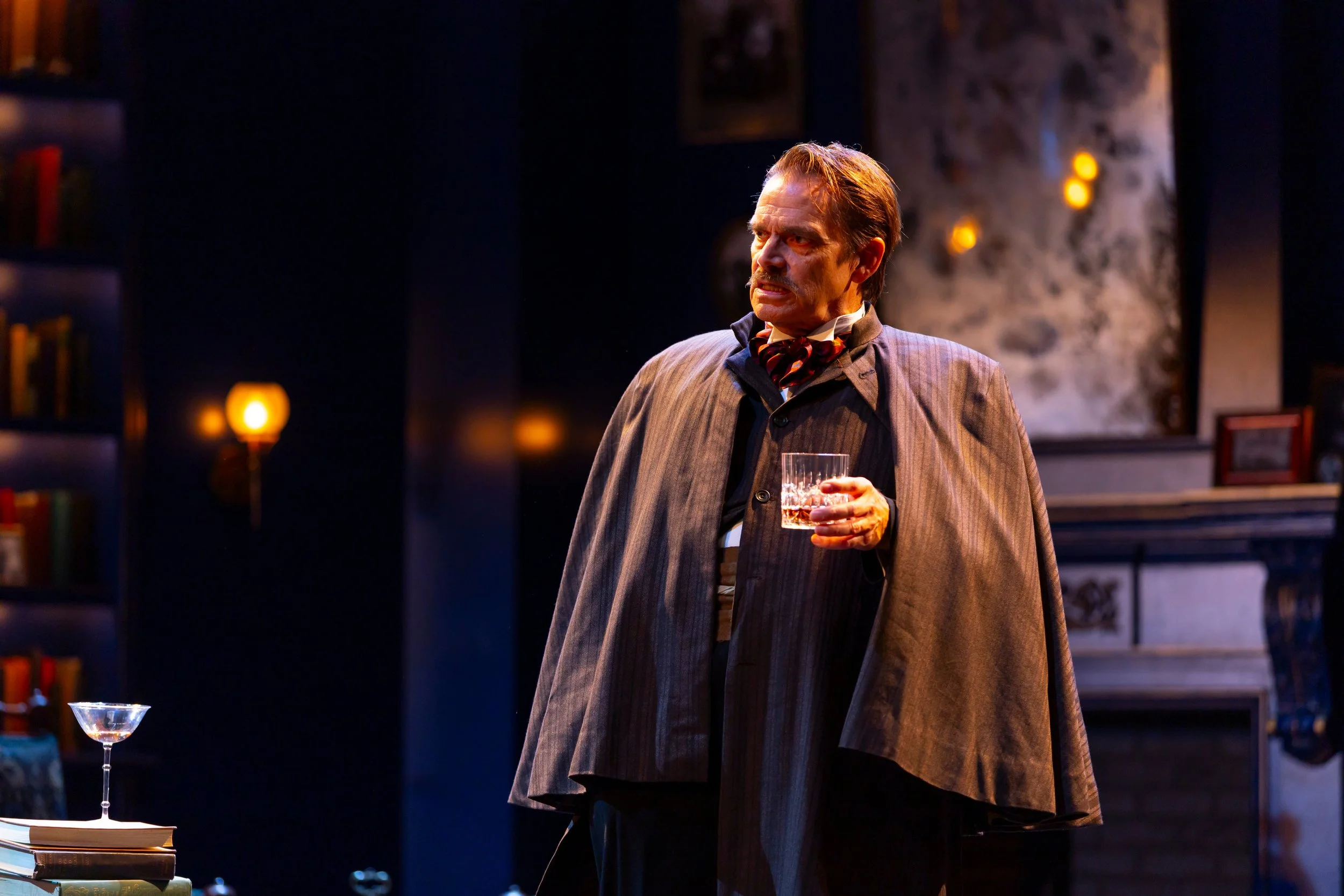
Morgan Lloyd Malcolm's adaptation of Dracula, Bram Stoker's venerable horror story, receives its American premiere, directed by Jackson Gay, at Hartford Stage through November 1st (the day after Halloween). Riw Rakkulchon's fascinating set provides Gothic atmosphere aplenty, centered by arched windows with missing panes, everything grayish and generally sepulchral. Fabian Fidel Aguilar's imaginatively rendered costumes, assisted by Tommy Kurzman's Wig, Hair & Make-up Design, with Paul Whitaker's expert lighting and Caroline Eng's involving sound all serve to render what should be a suitably macabre experience, as fans of the Transylvanian count's enumerable appearances in theater, film, TV, comics (you name it), have come to expect. Credit as well, in this very physical spectacle, to Movement Coordinator Shura Baryshnikov and Fight Director Rod Kinter.
Where this Dracula goes wrong is in the telling, far too expository, and in its polemical but mostly rhetorical politics. The dramatization works against the story we've gathered to enjoy. Horror buffs beware.
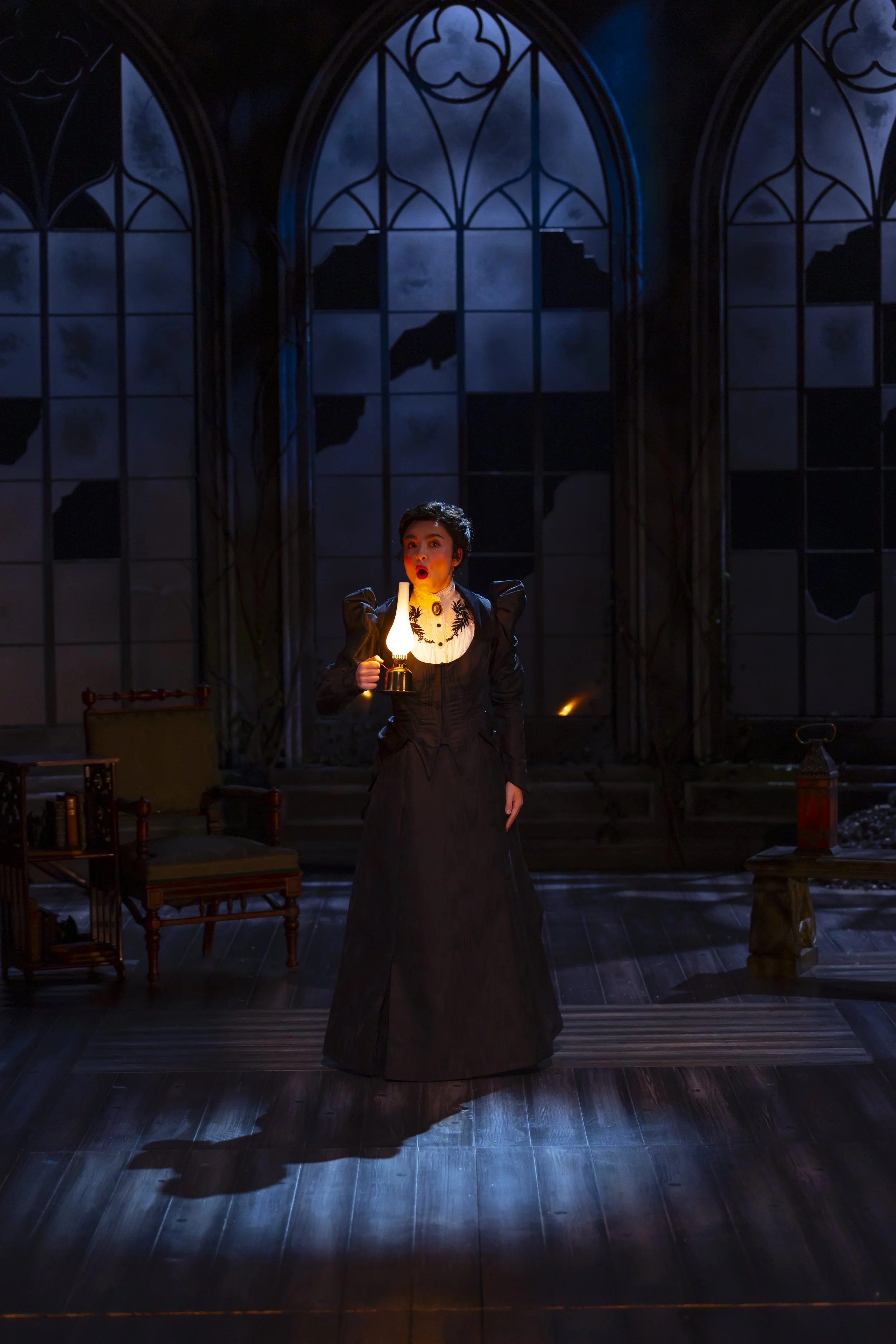
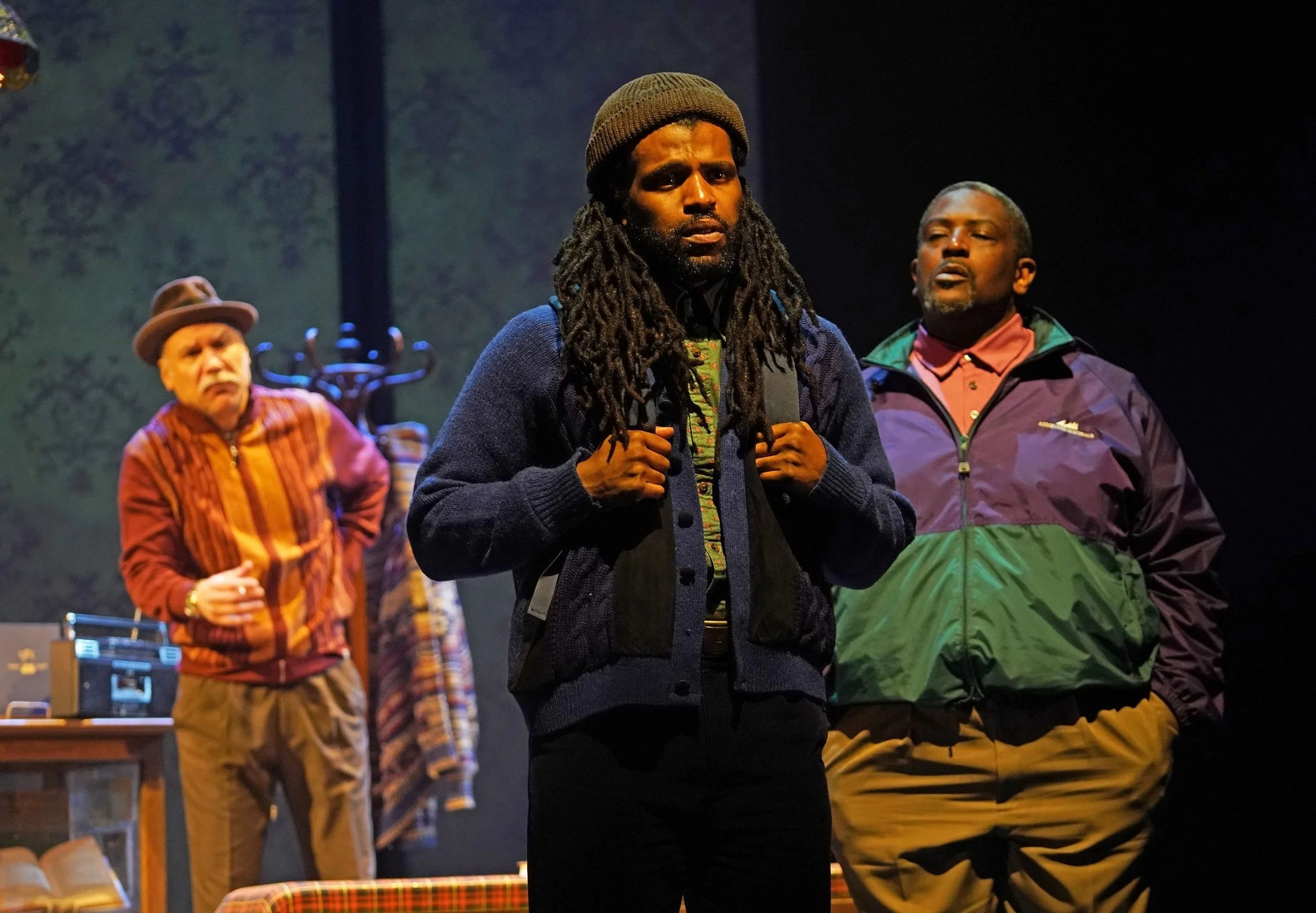
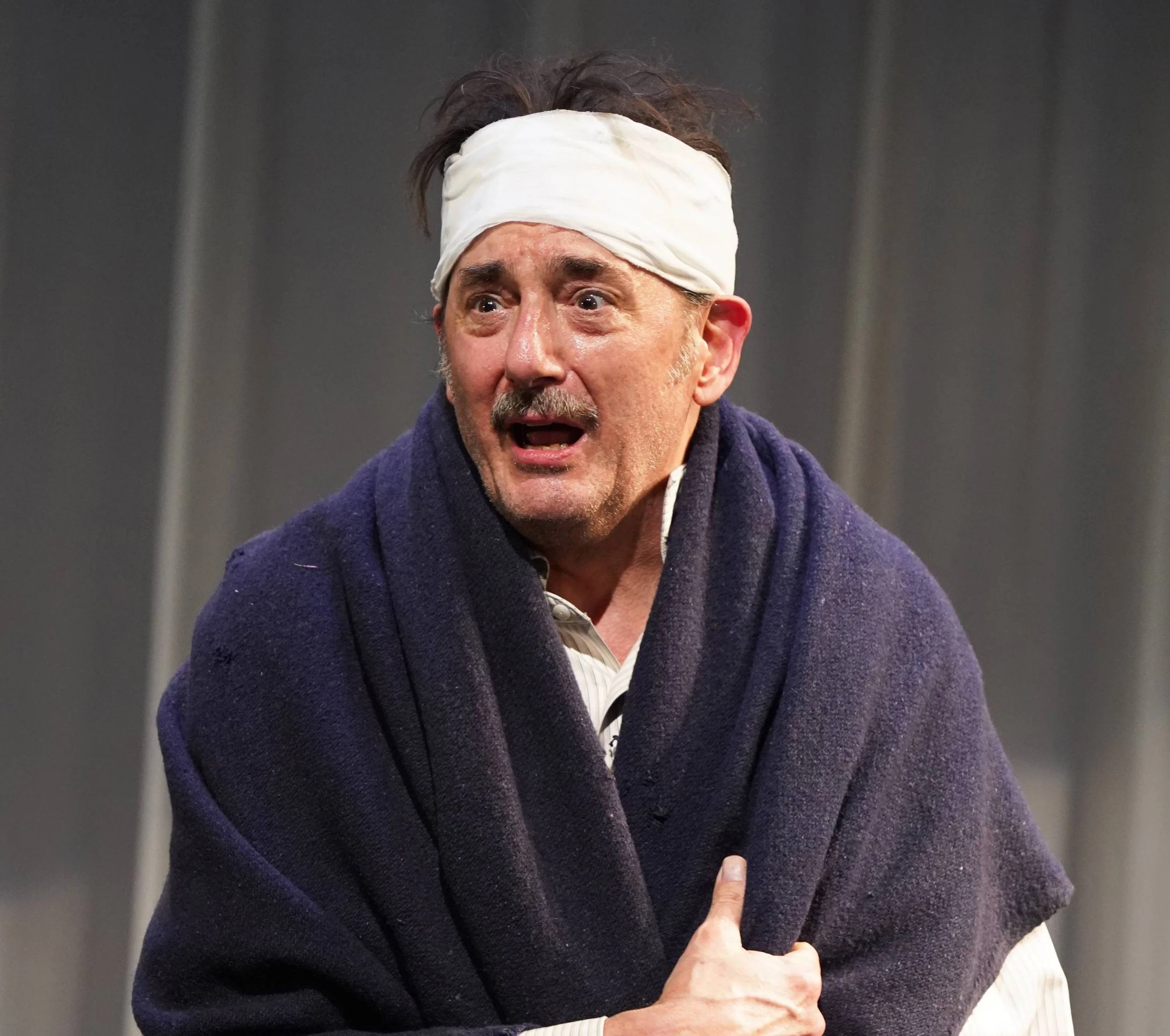
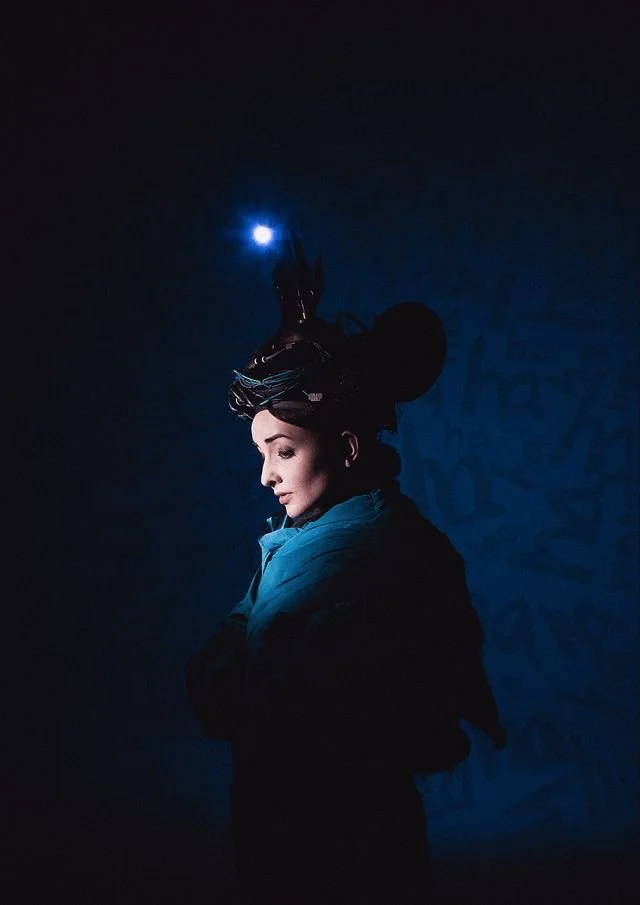
Sara Gutierrez as Mina Harker in Dracula, Hartford Stage; photo by T. Charles Erickson
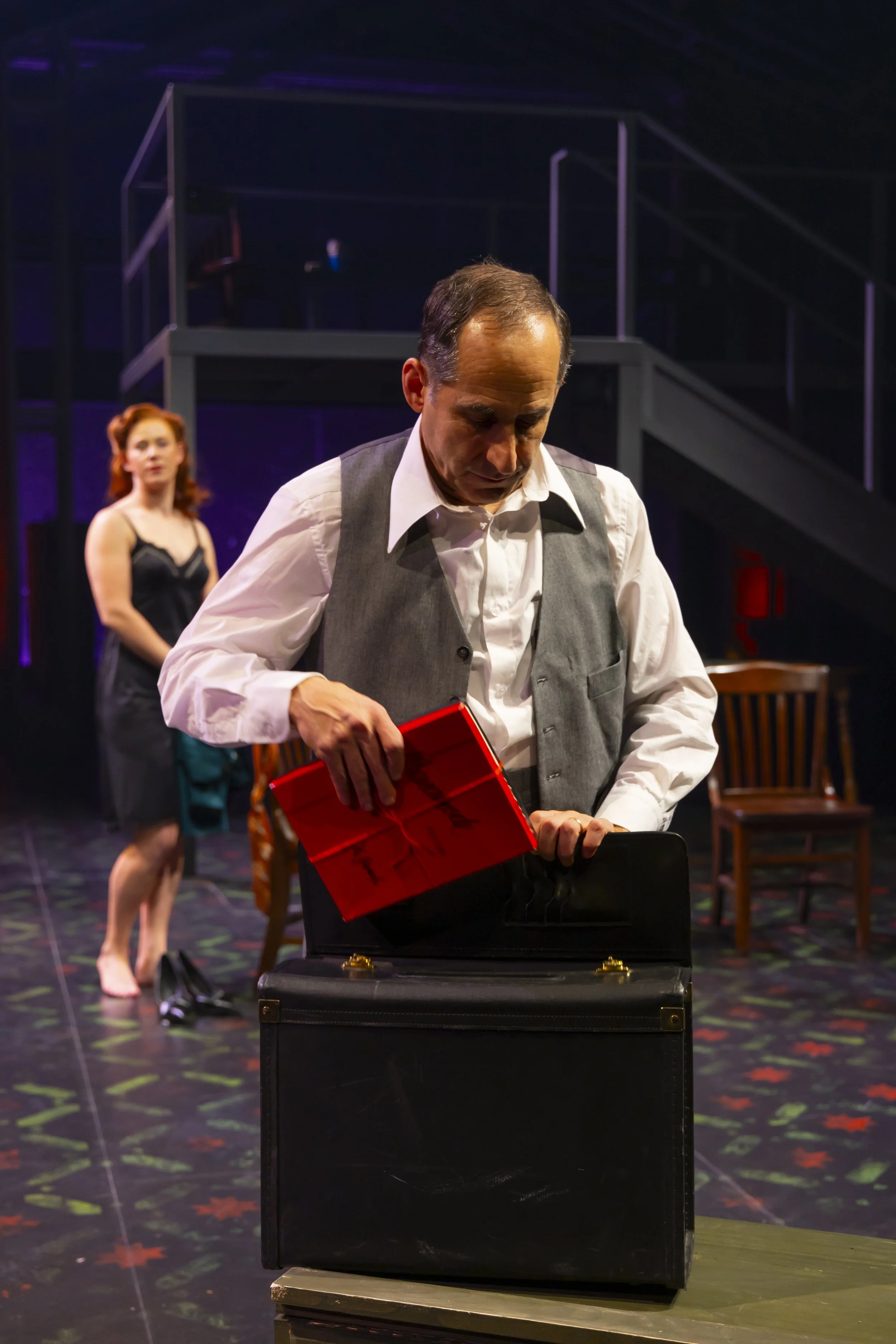
In a seeming preface, Mina Harker (Sara Gutierrez) informs us she's the only survivor of the events she will recount with the aid of four ensemble actors (Scout Backus, Caitlin Elizabeth Cloutier, Anney Giobbe, Pauli). A fifth (Lucas Dixon) plays only Mina's husband Jonathan, source of the first account of Dracula as he journeys to the Count's castle to meet him and facilitate his acquisition of land in England. To be fair, Mina does warn us to question the teller, while trying to mine the idea that essentially we only fear what we're taught to fear. Still, given where this is going, we've much cause to question what we're told and how it's told. It's an interesting point, since Stoker's narrative consists of multiple tellers—in journals and letters—so nothing is directly "authorial."
That opening presentation evolves into swiftly changing scenes which more or less use the novel's language to help us imagine what's happening before us. It's a bit like watching pantomime with very long title cards. If you've read the novel, you may have noted that no enacted version of the Count quite captures Stoker's rendering, yet we're generally given some kind of physical rendition. Not so here.
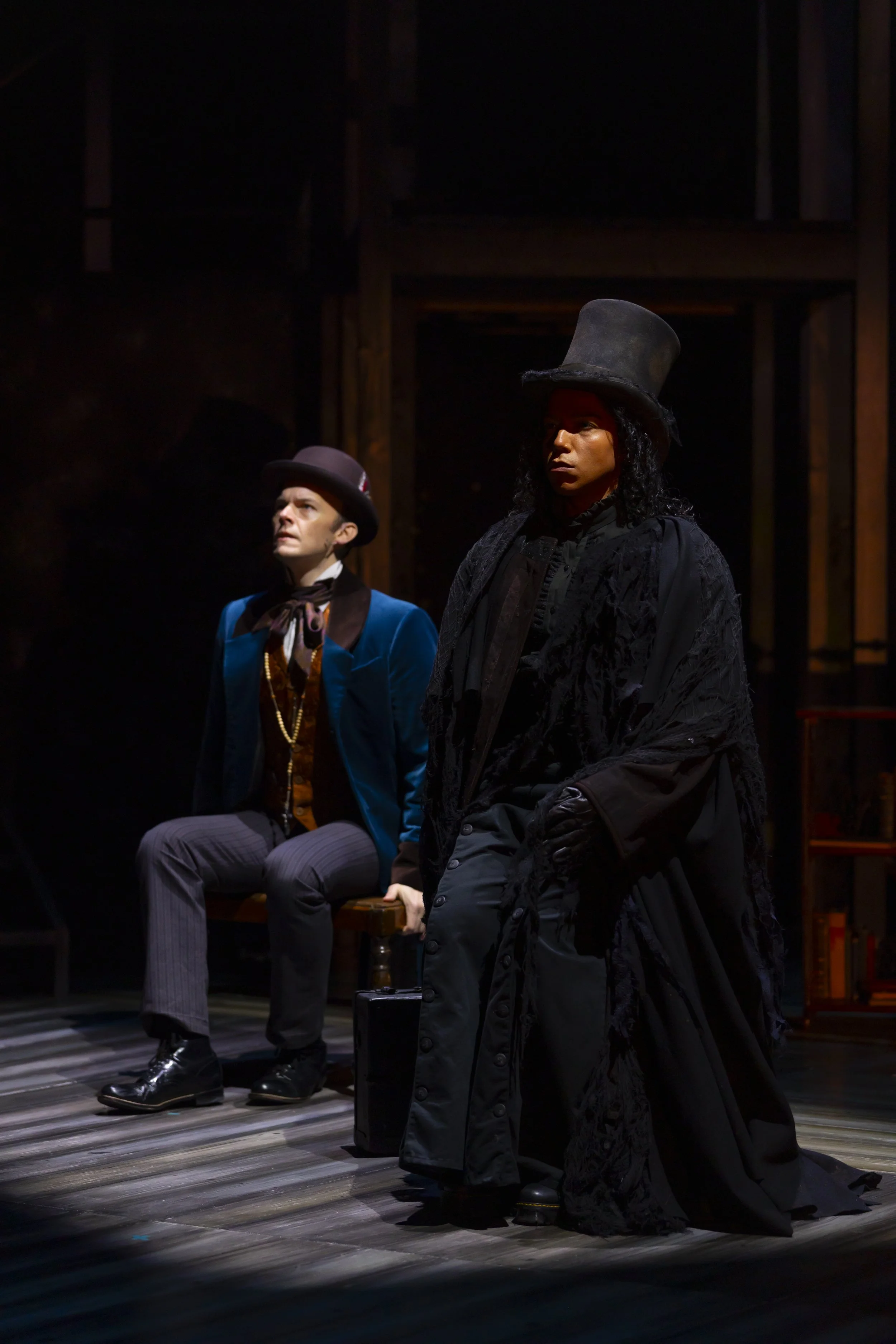
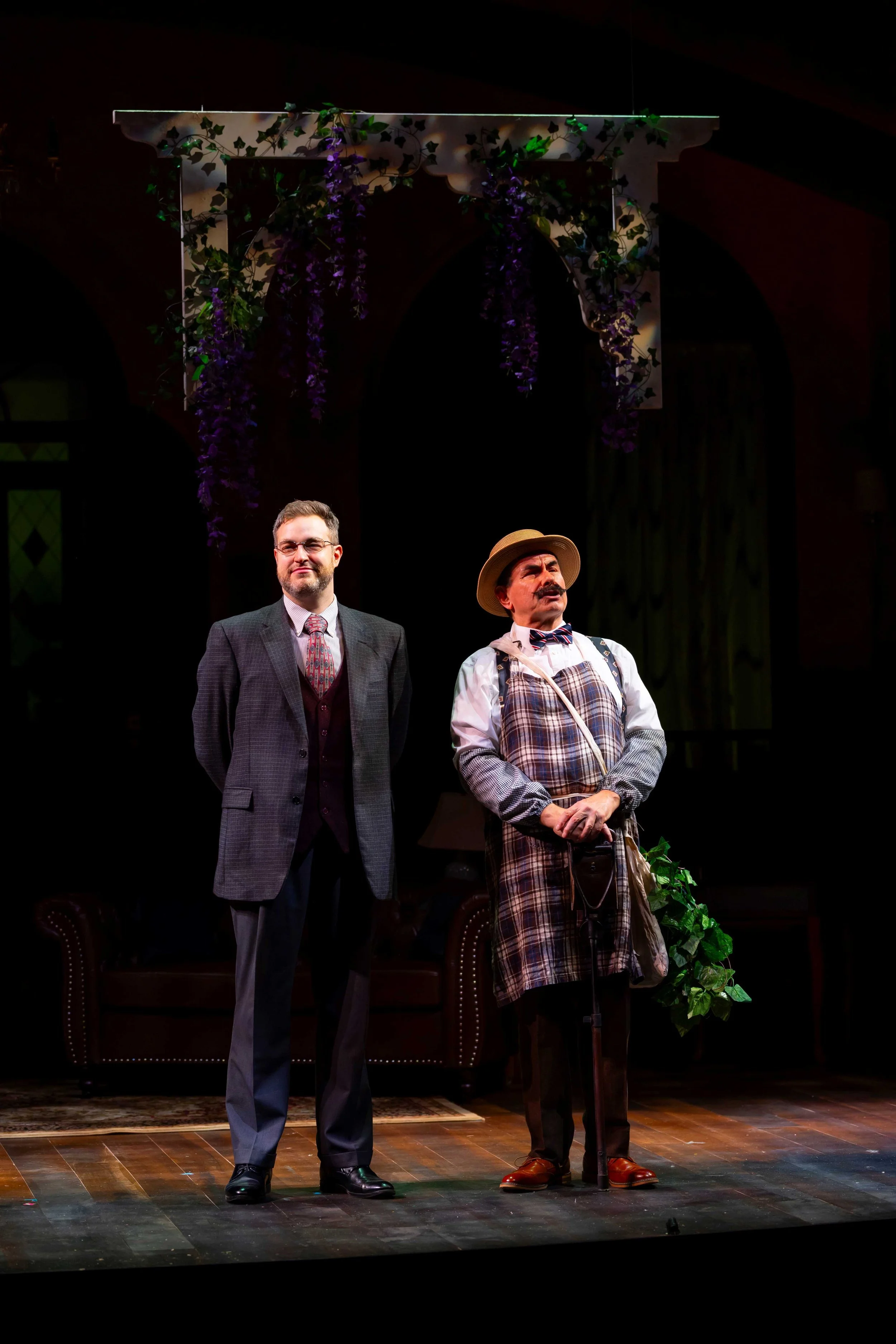
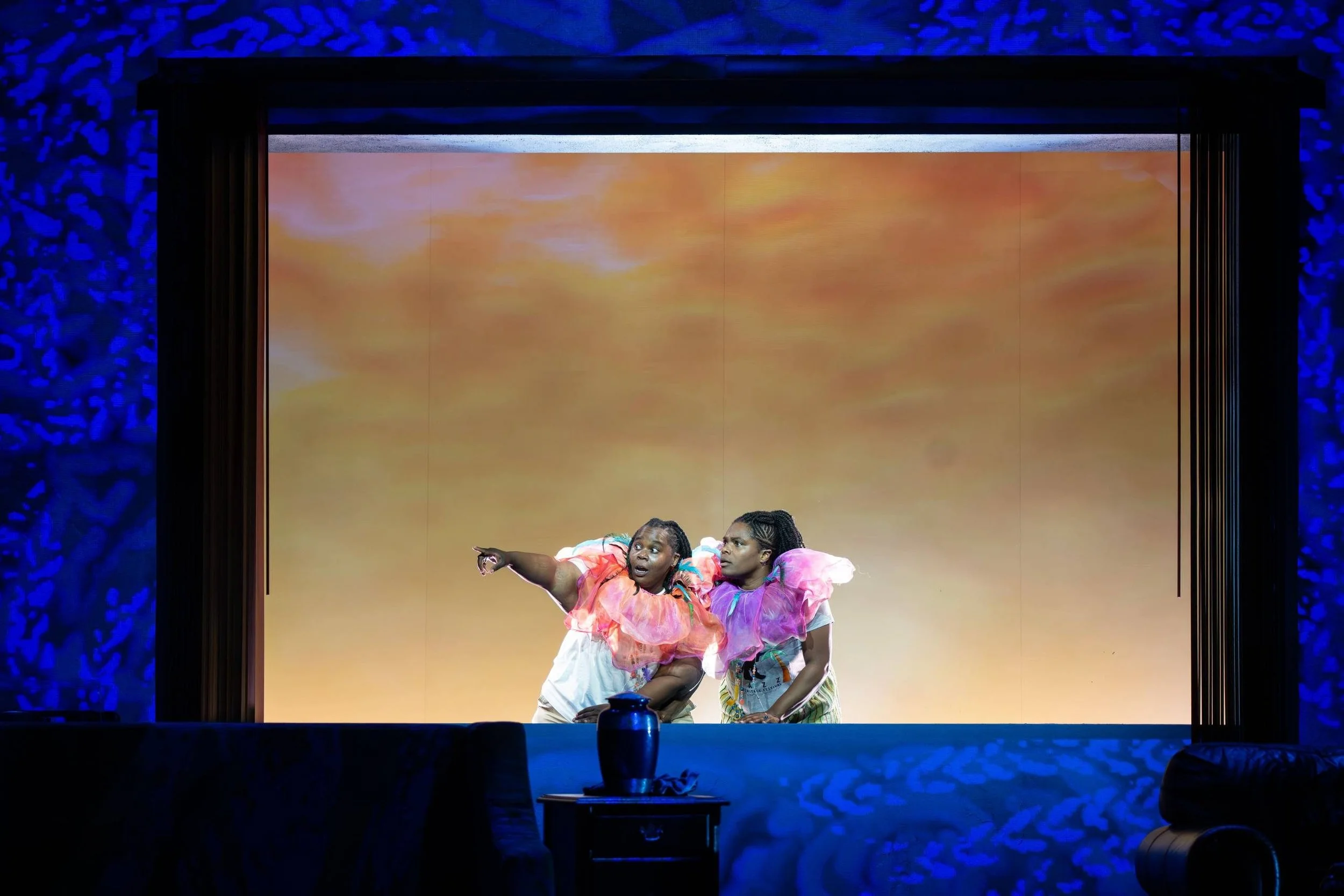
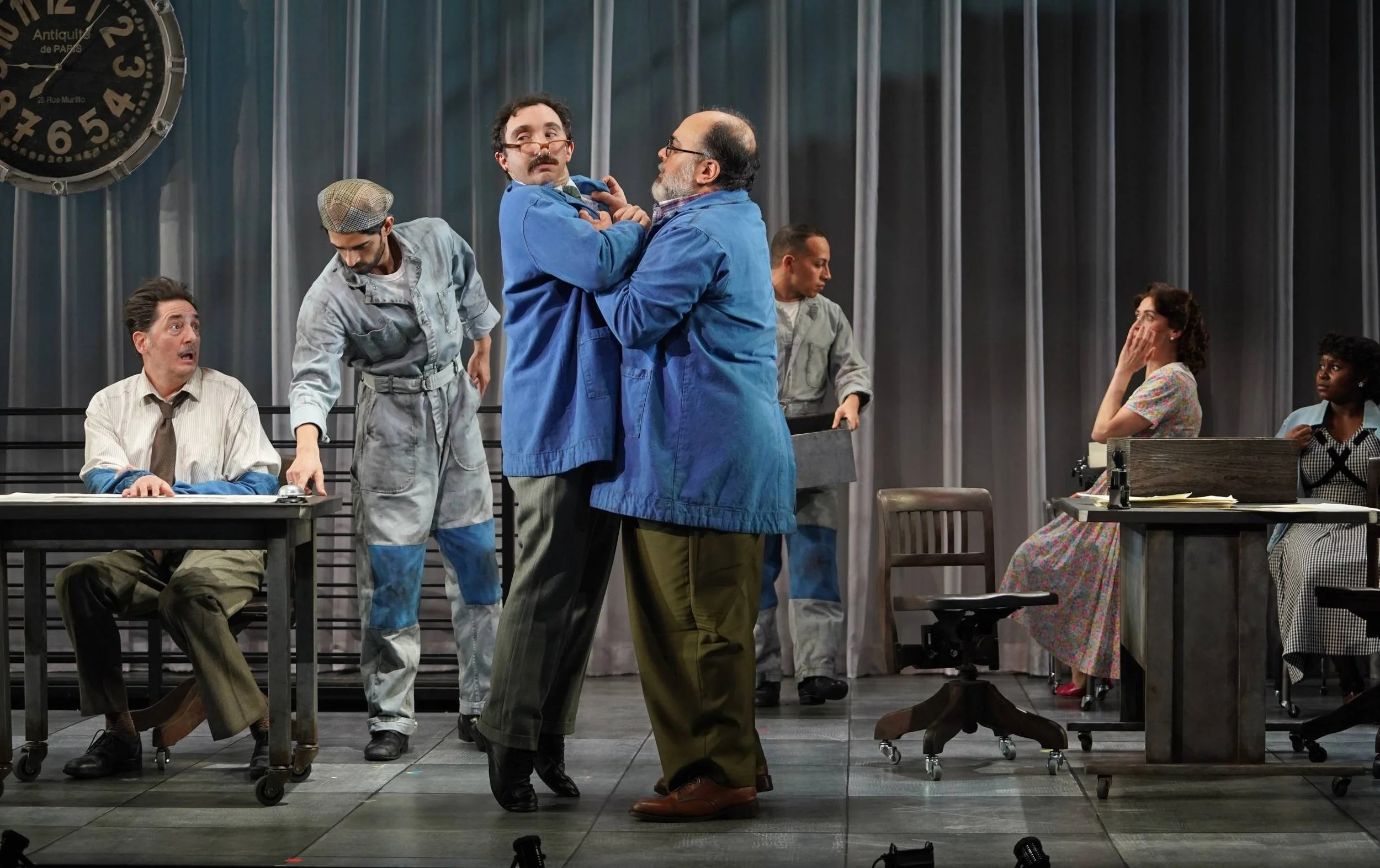
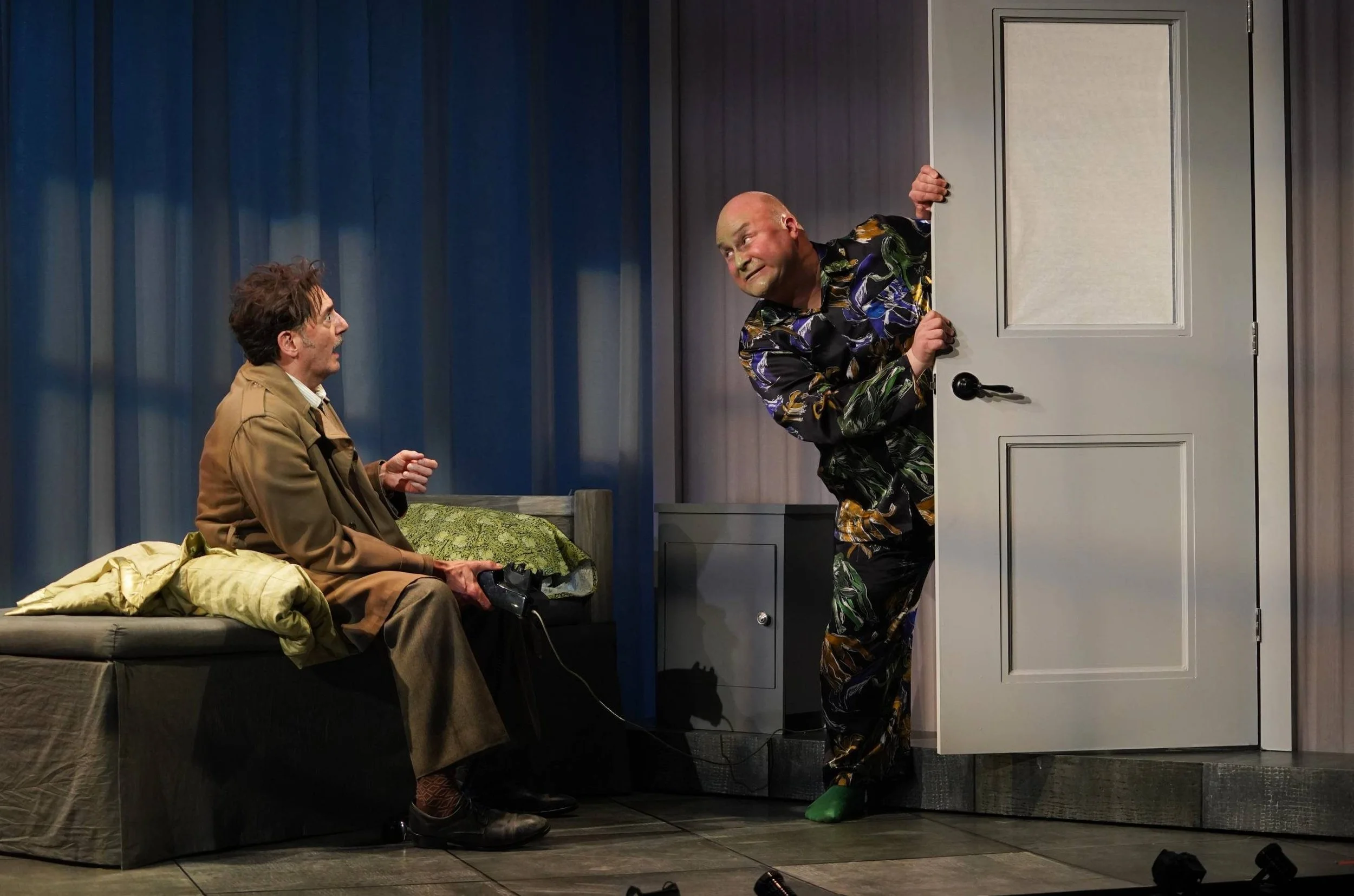
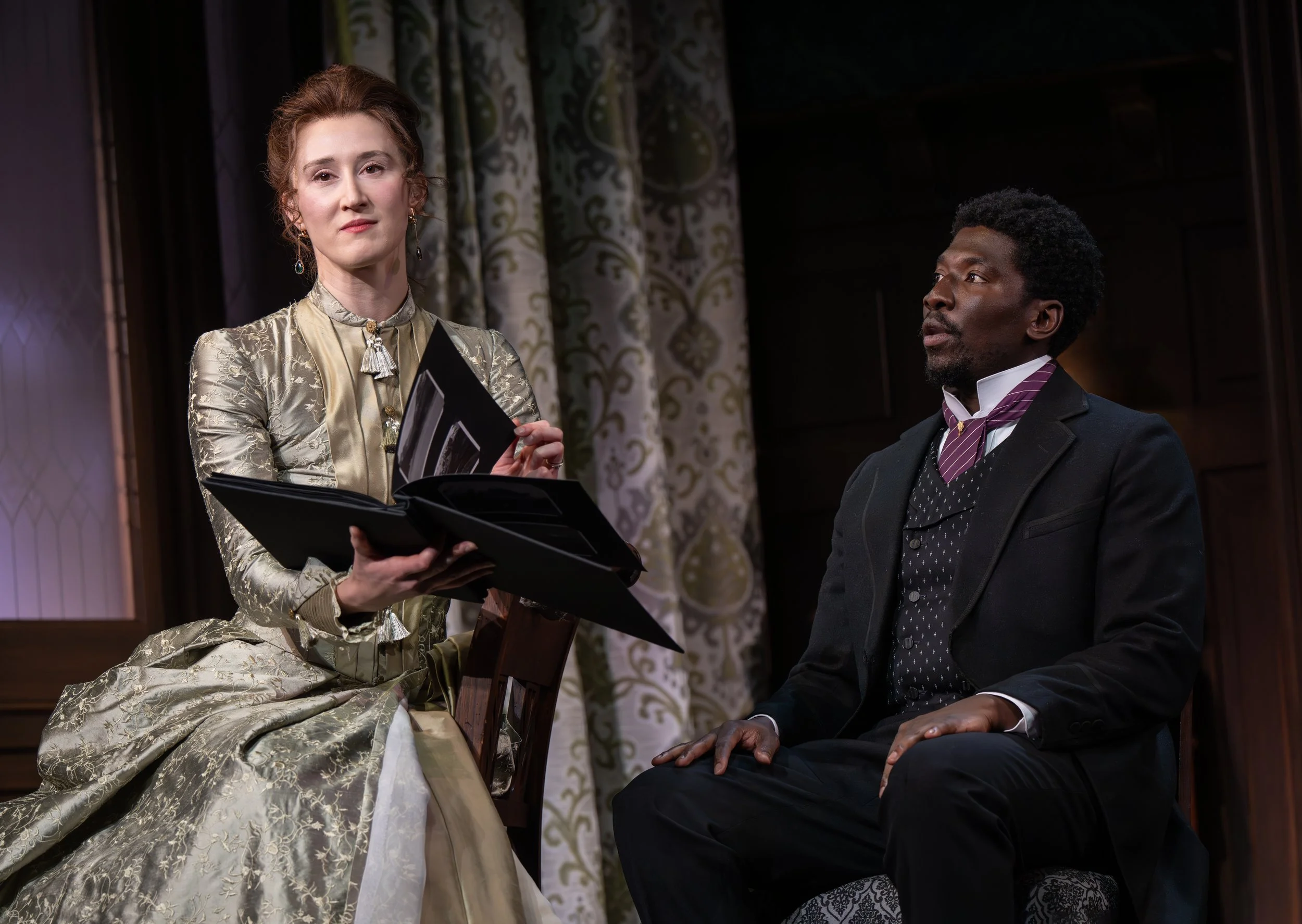
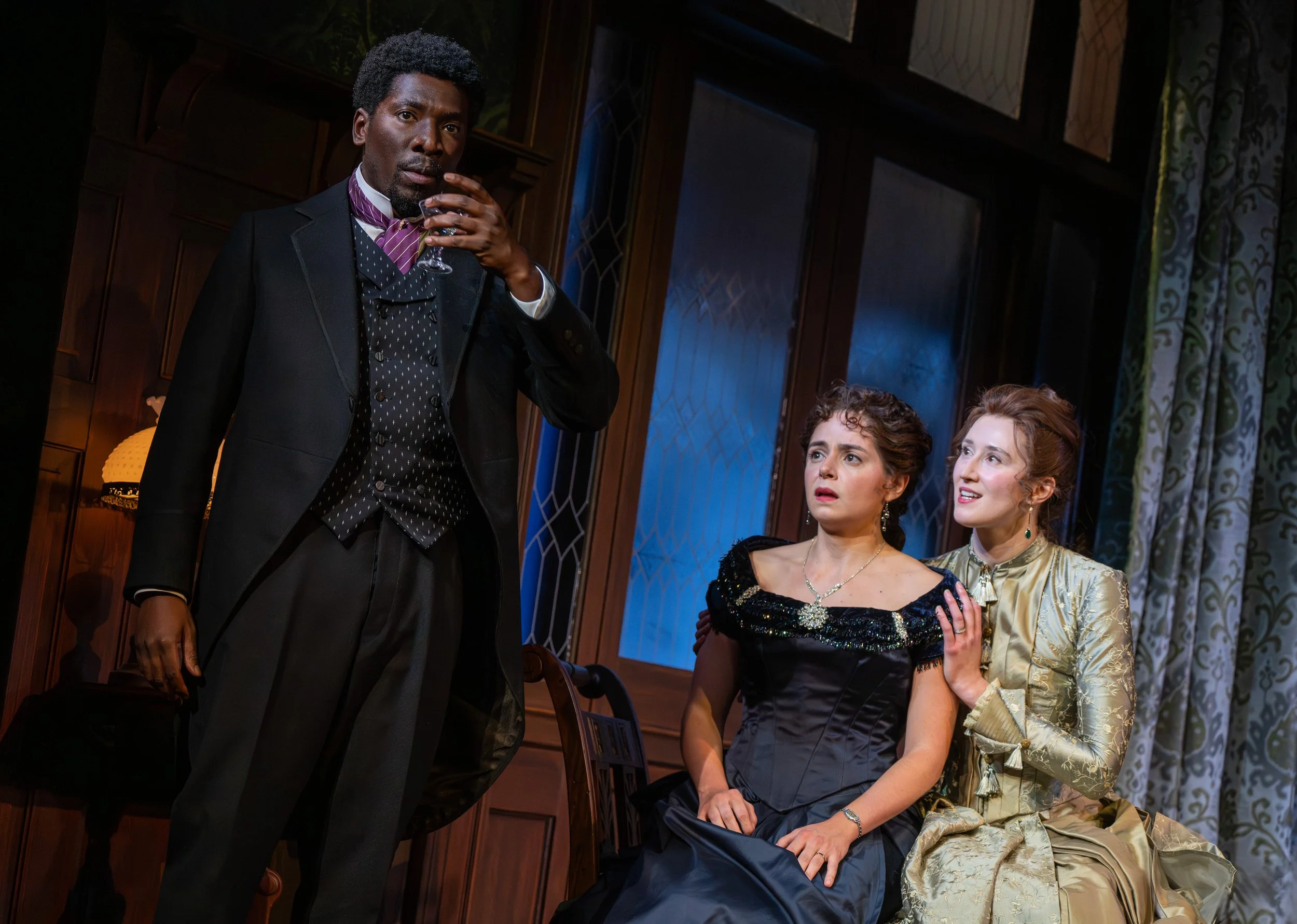
Lucas Dixon as Jonathan Harker, Pauli as the Coachman in Dracula, Hartford Stage; photo by T. Charles Erickson
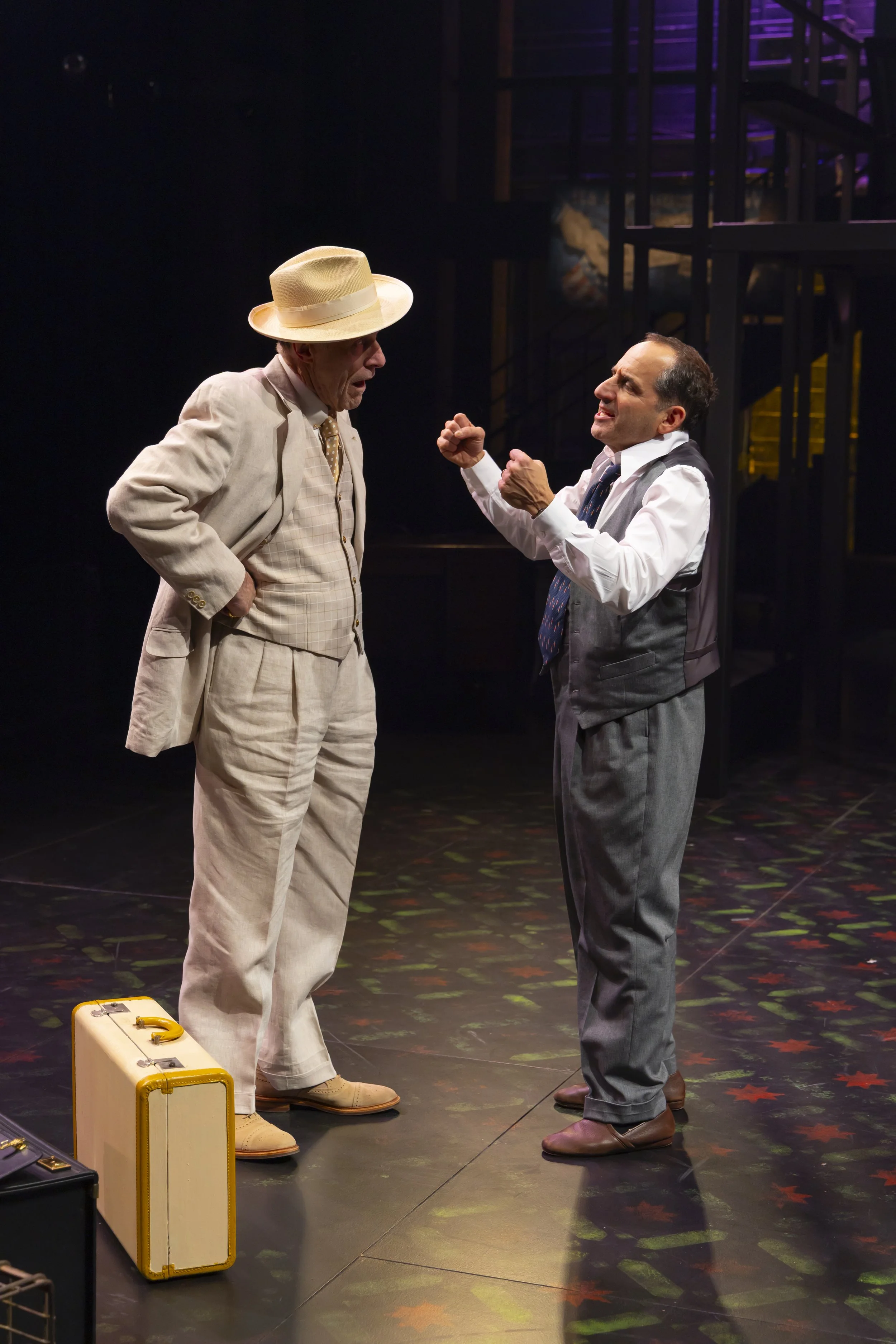
In his long career (the novel was first published in 1897), Dracula has been depicted as exotically regal, as hypnotic and unfeeling, as romantic and handsome, as creepy and animalistic, but here we have only Jonathan's words for him: he is old, hairy, sinister, with noisome breath. Later, of course, the image of the Count changes, becoming younger once he has human victims to prey upon. This production uses effectively a few visual renderings of the more threatening aspects of Dracula (the mirror breaking is imaginative and gives a shred of hope), but the lack of consistency becomes a distraction, including a rather comical-looking wolf-beast.
We soon become aware that the distractions are not faults of the production but deliberate. Malcolm and Gay, via Mina, want to exploit a Brechtian sense of how best to keep the audience from settling into a shared fantasy. That approach effectively disrupts the horror story elements, but to what end?
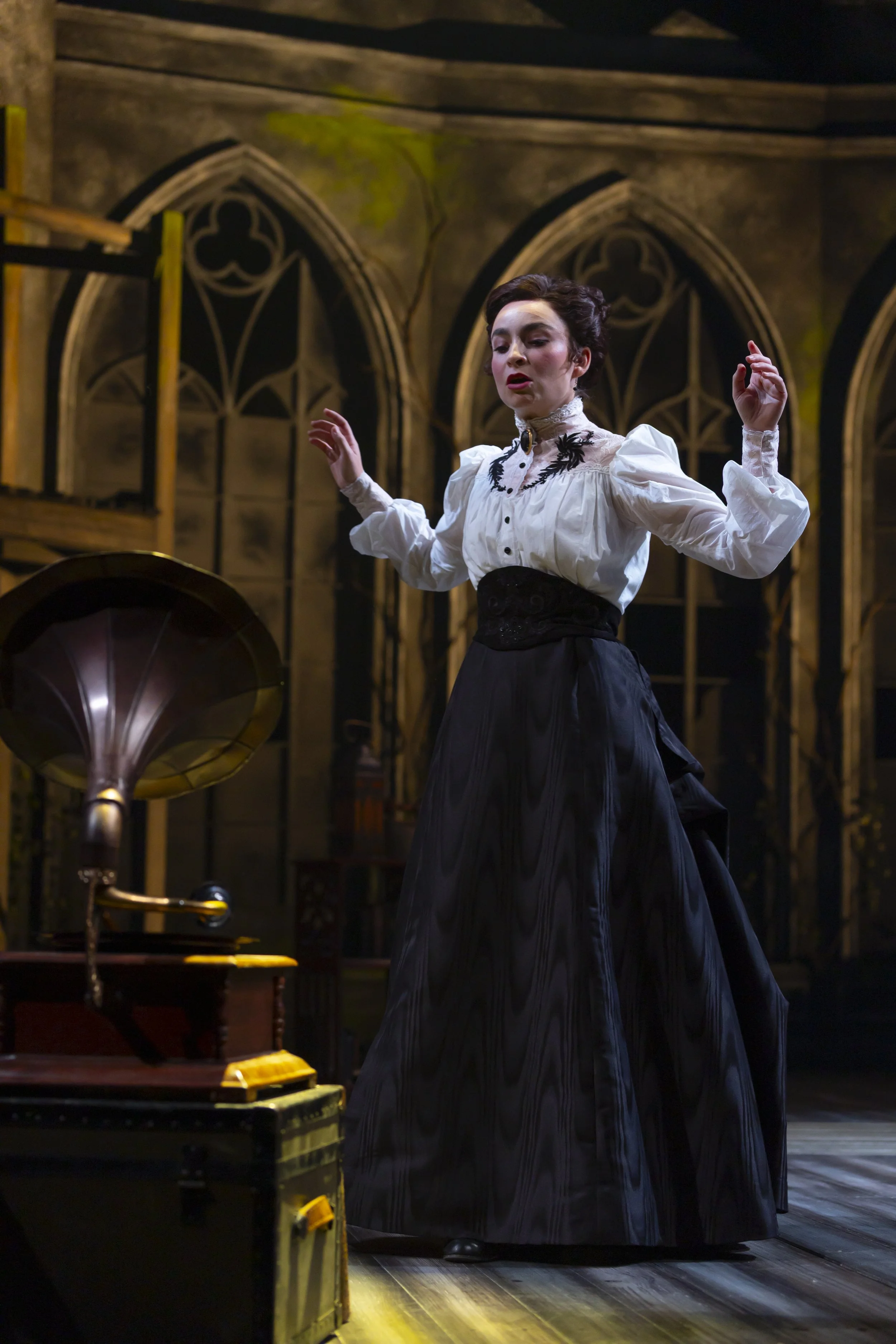
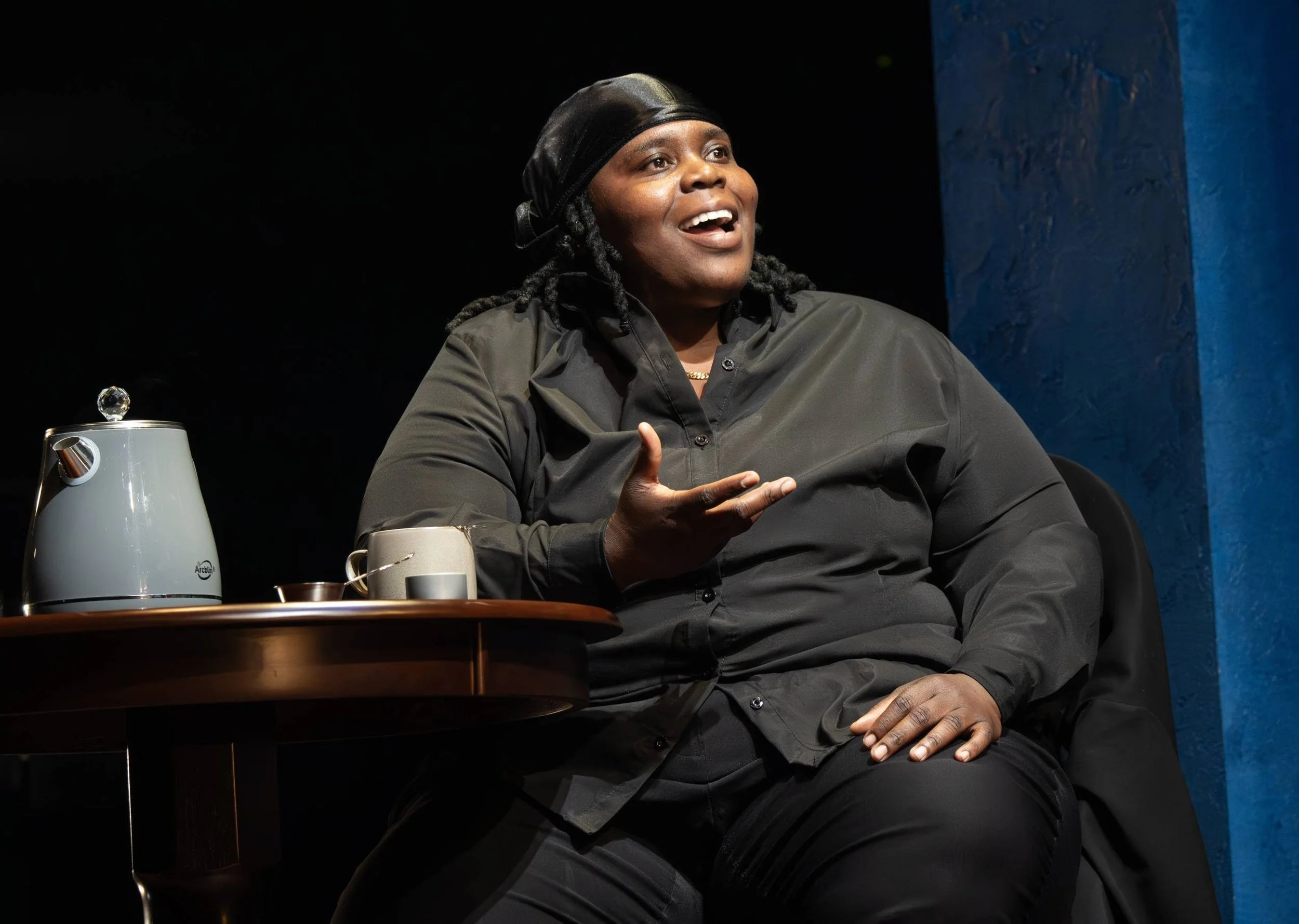
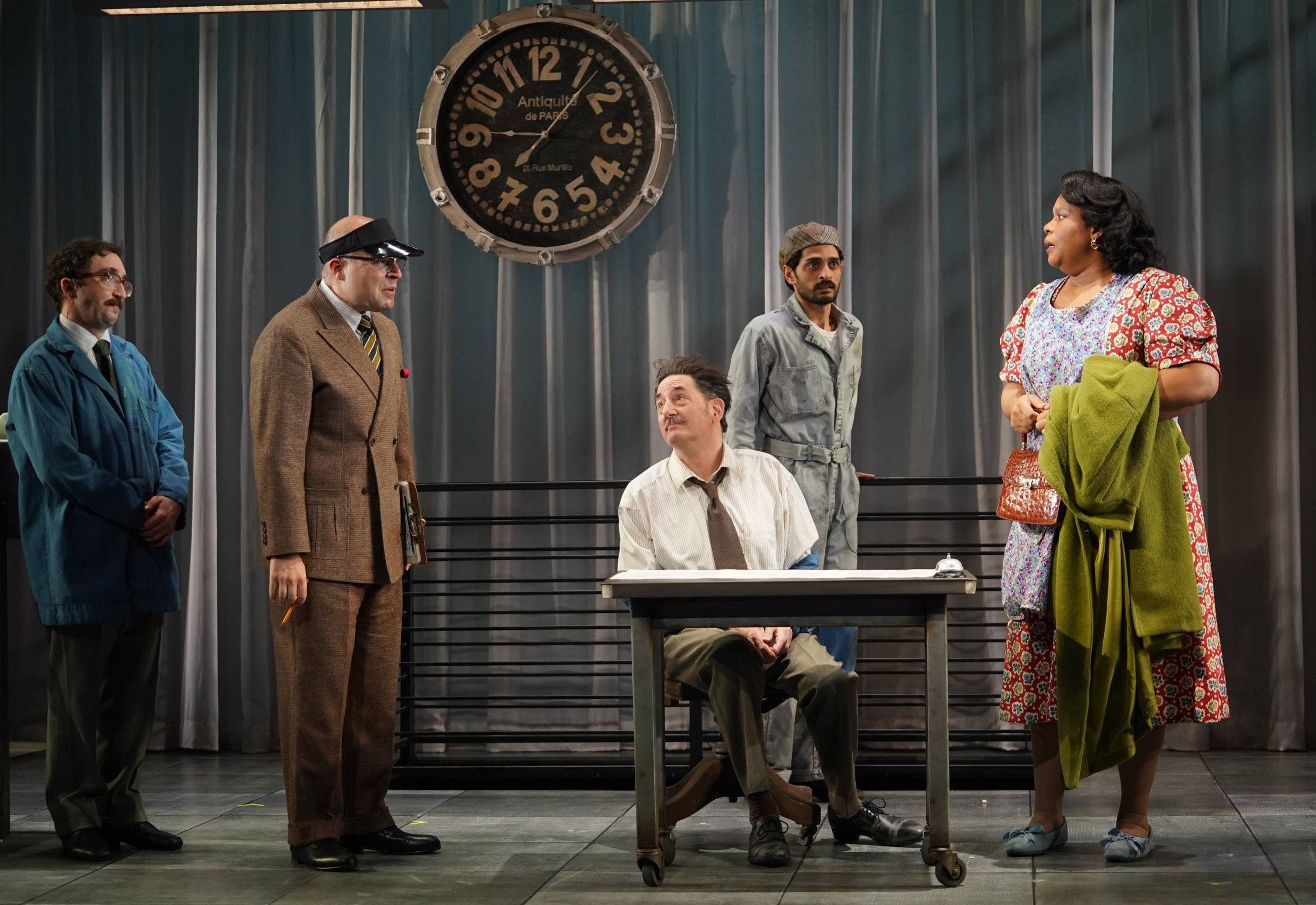
Sara Gutierrez as Mina Harker, with phonograph, in Dracula, Hartford Stage; photo by T. Charles Erickson
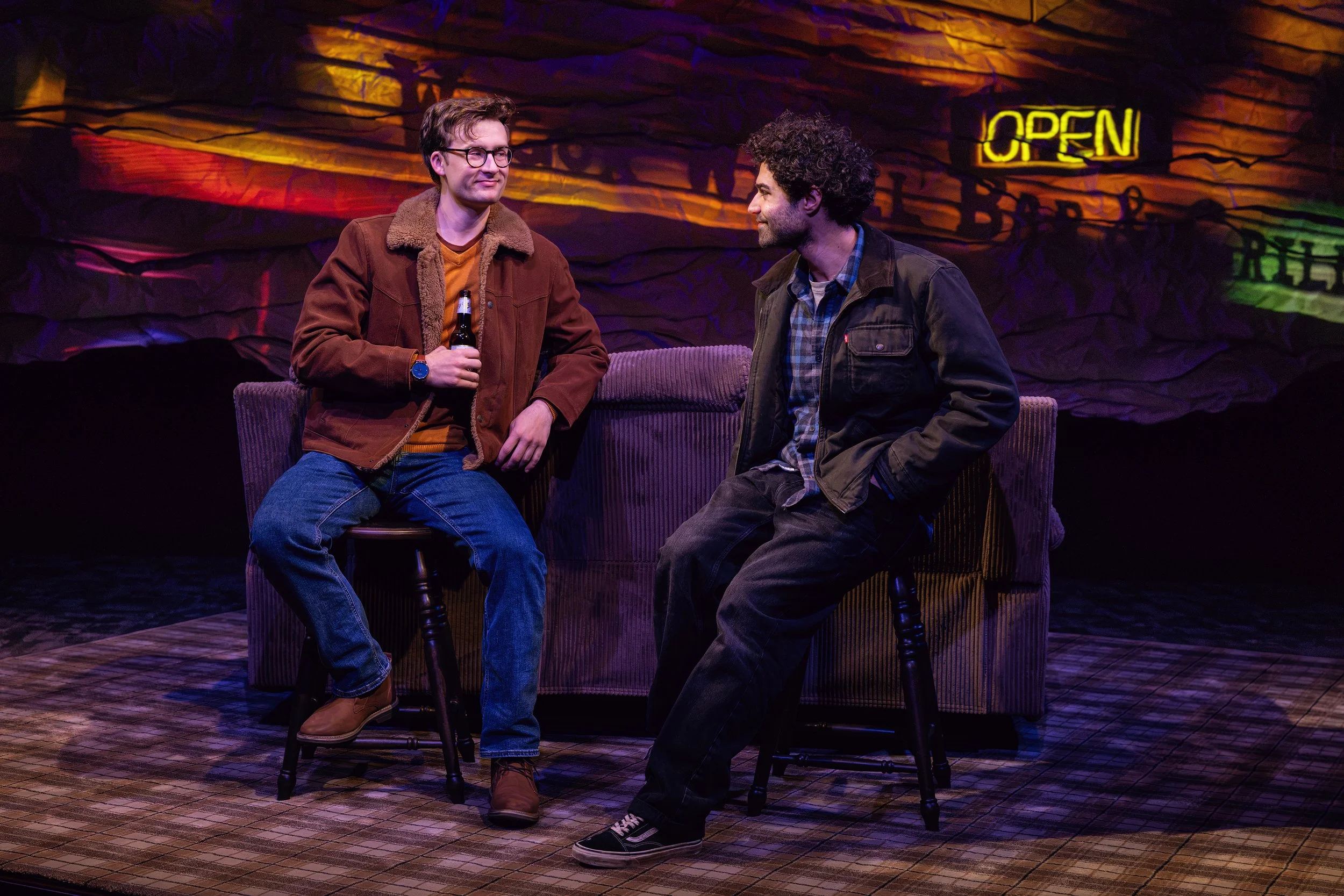
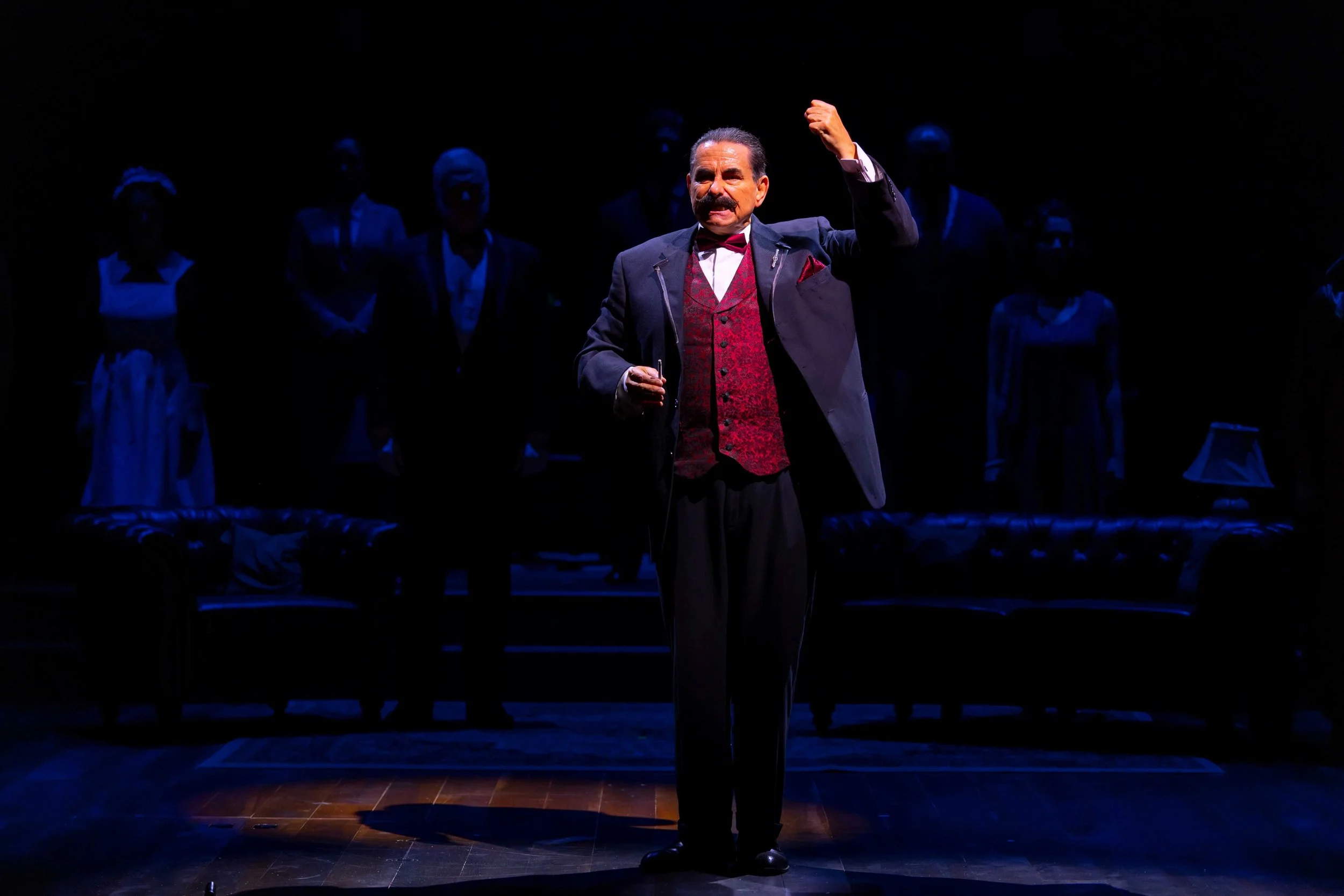
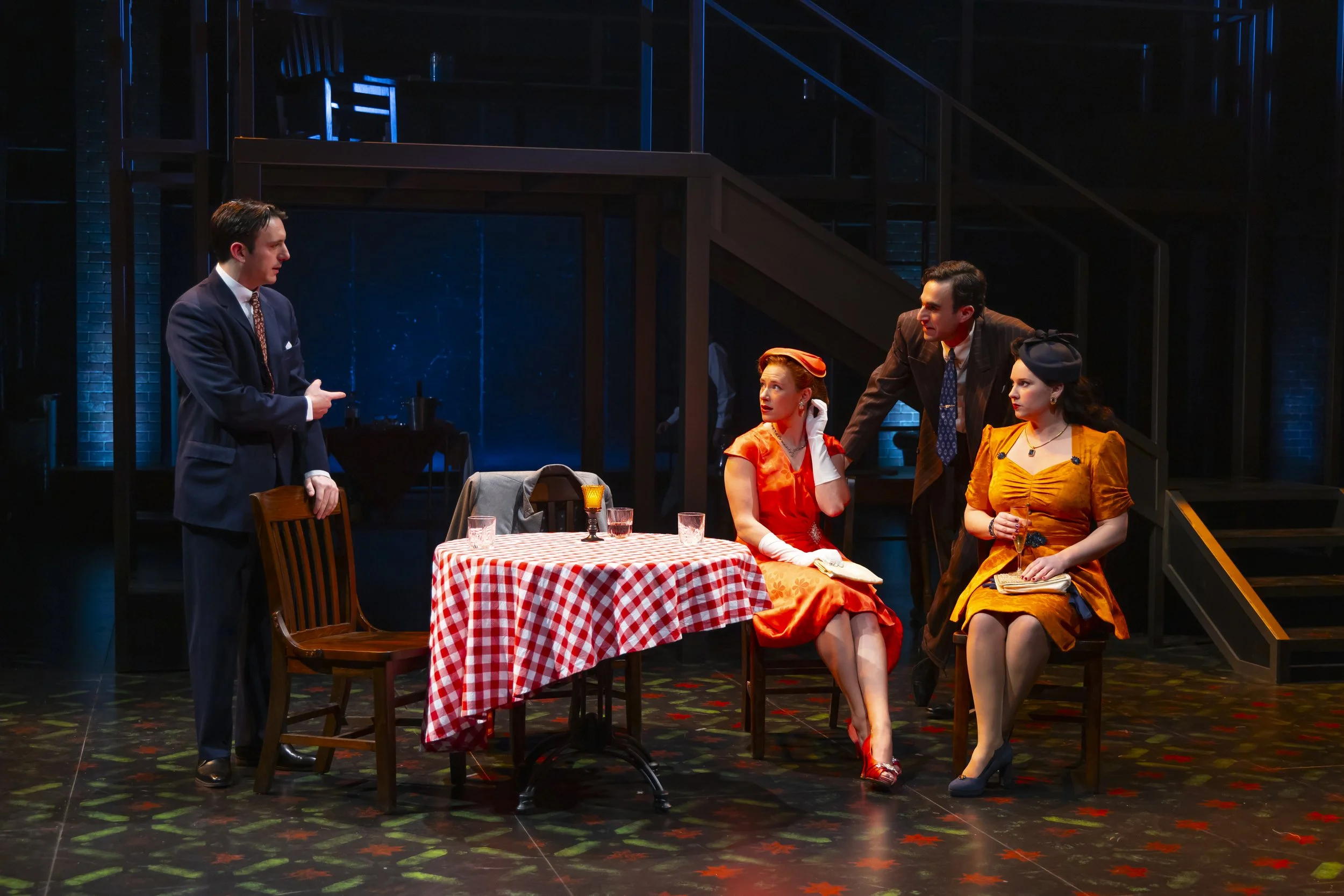
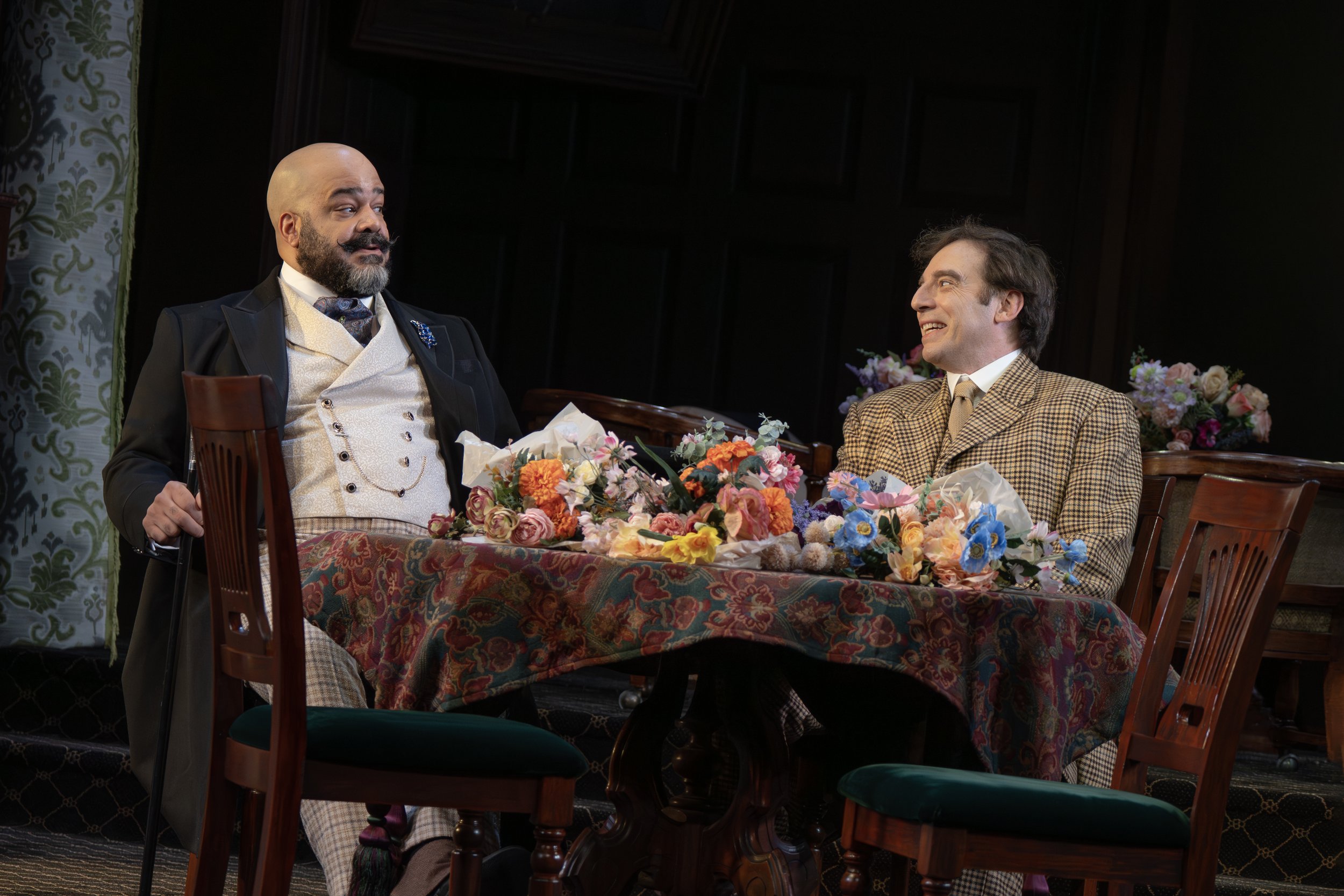
If the aim were merely burlesque (and campy lampoons of Dracula are common), then we'd accept such things as Dr. Seward represented by a phonograph recording and the nonbinary comical threesome who try to hunt down Dracula's coffin (it should be said Malcolm's version follows the book's plot fairly accurately). The trio of suitors for the hand of Mina's friend Lucy (Scout Backus) are easily played for laughs (stock characters all), and here Van Helsing (Pauli), the vampire-expert, gets the same treatment (though not nearly as campy as Anthony Hopkins' hilariously over-the-top depiction in Coppola's 1992 film version).
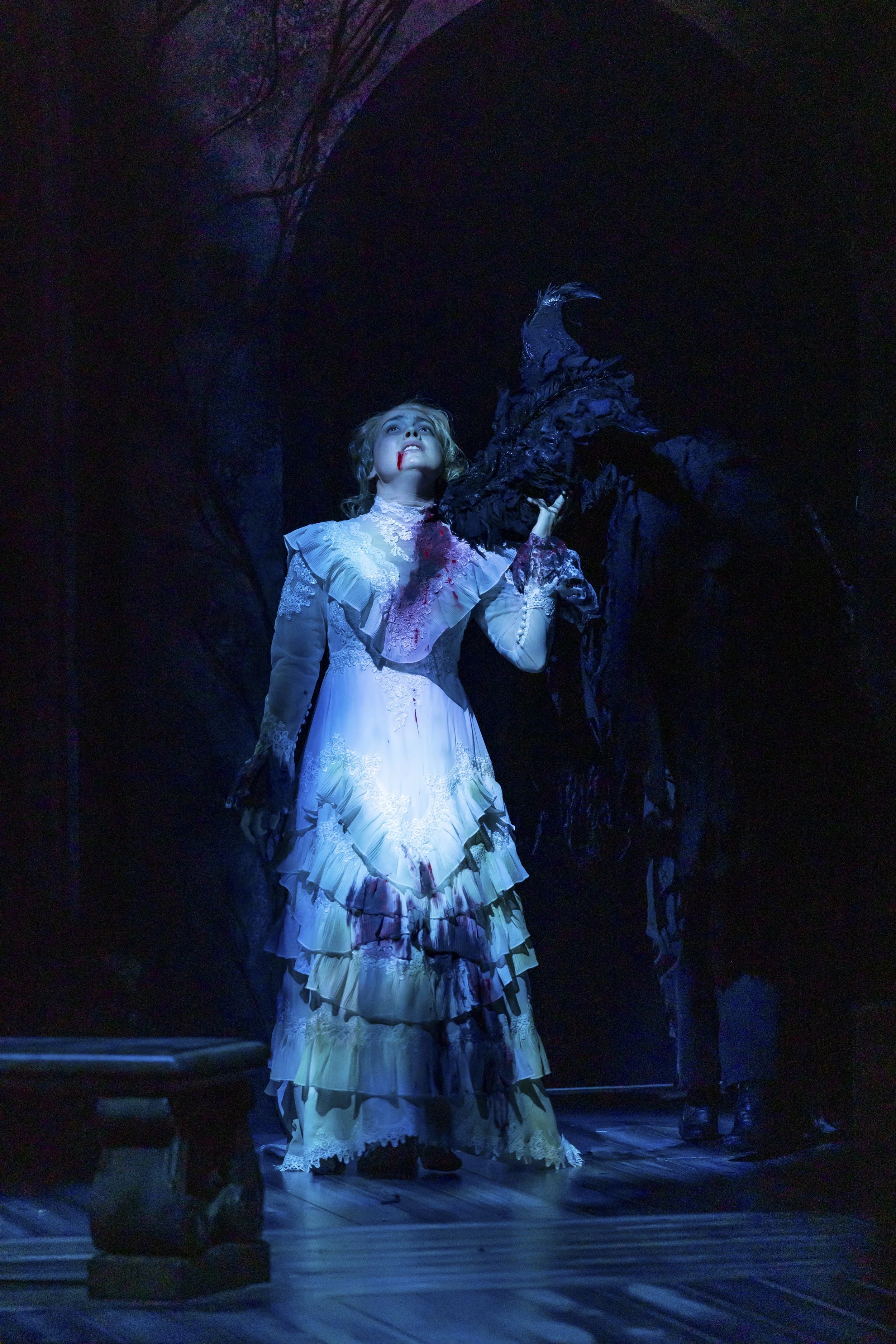
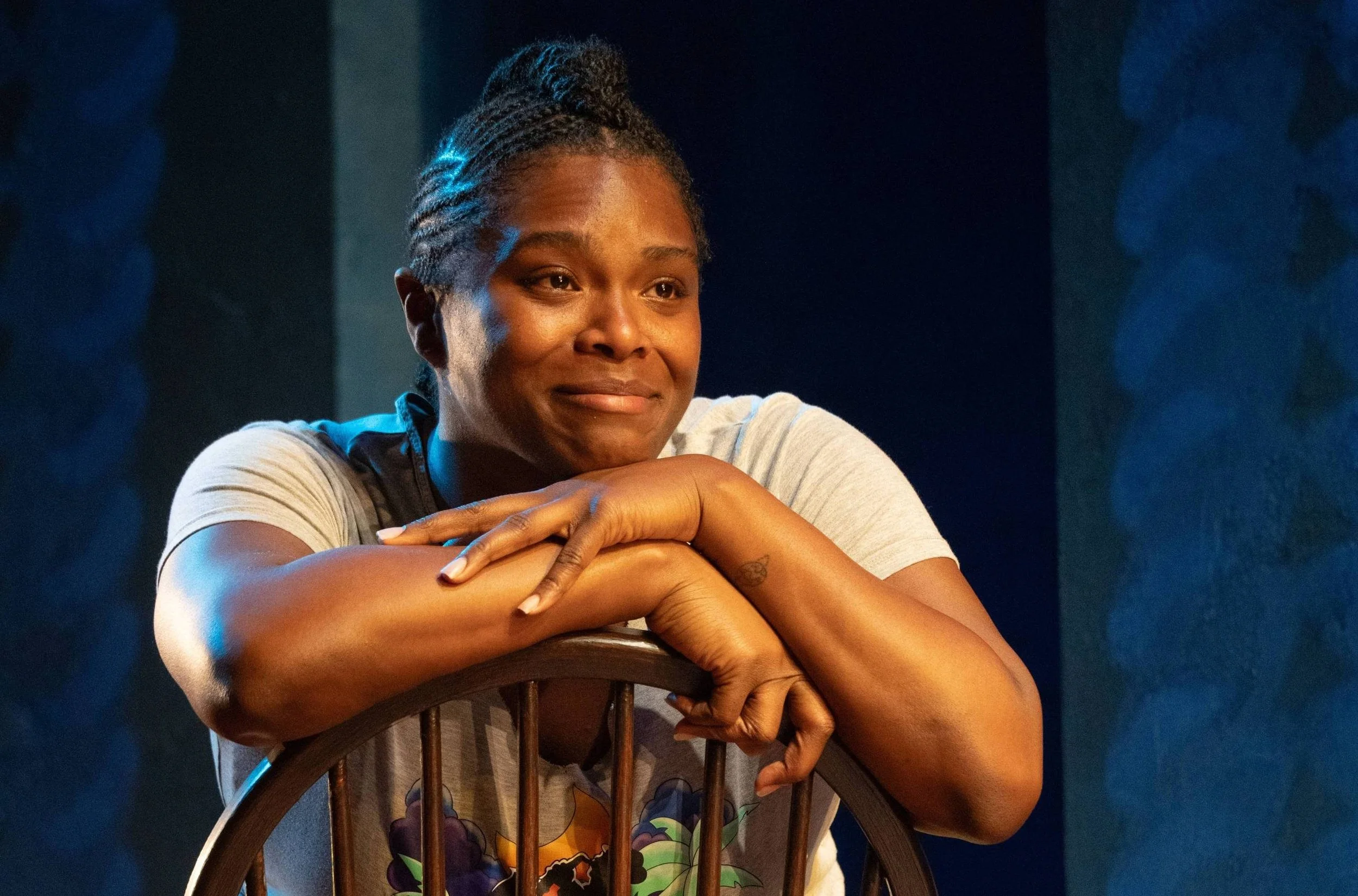
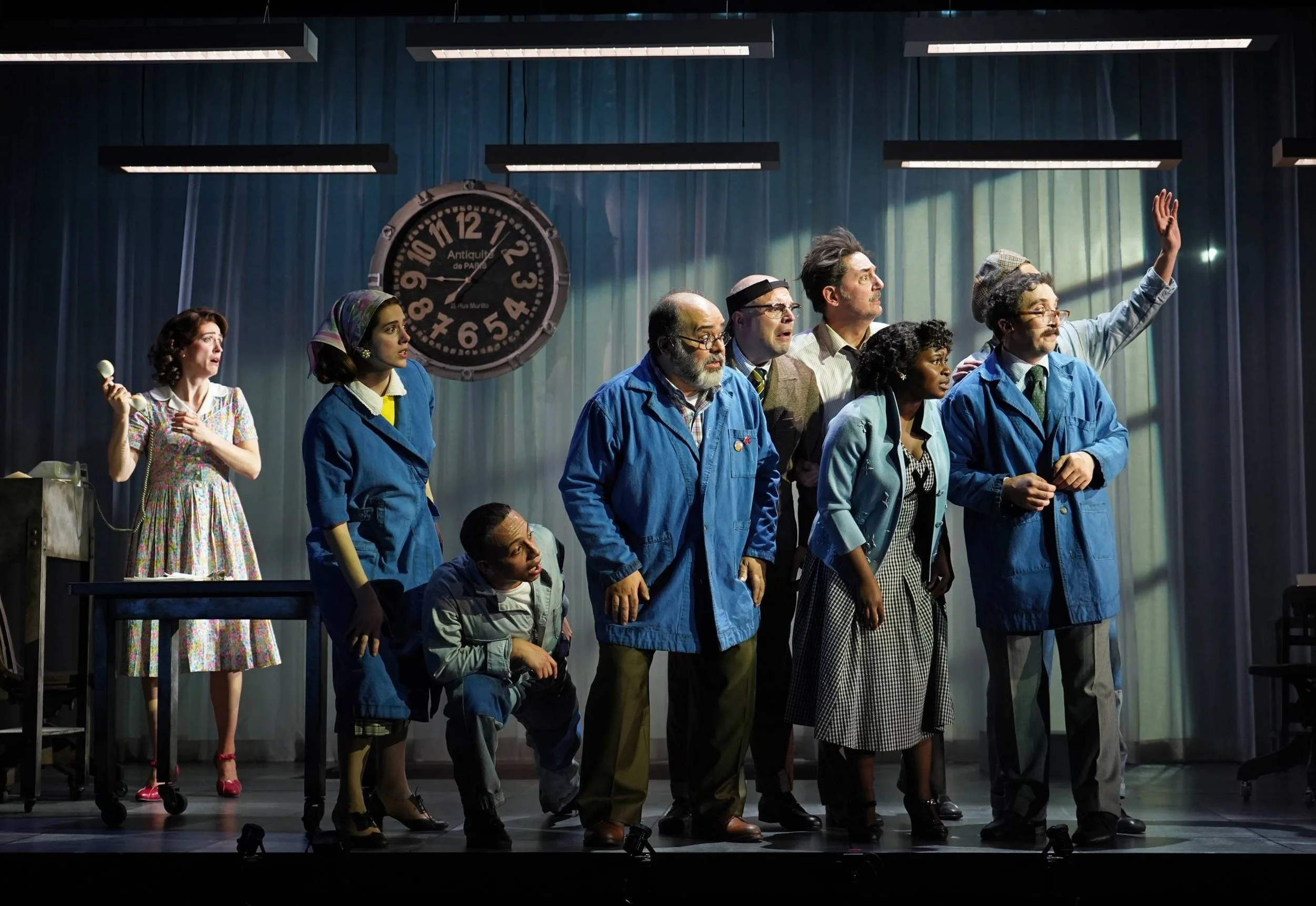
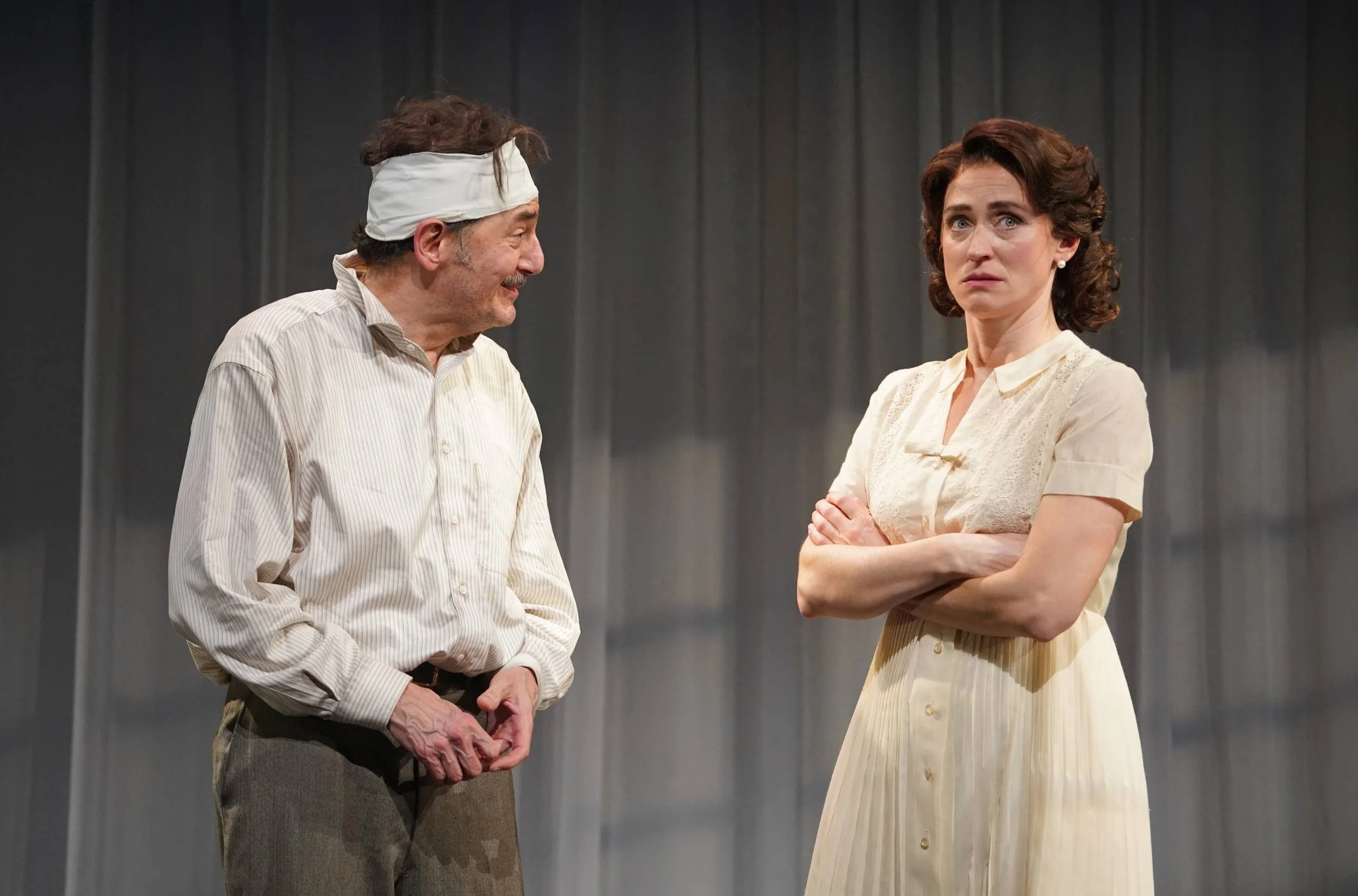
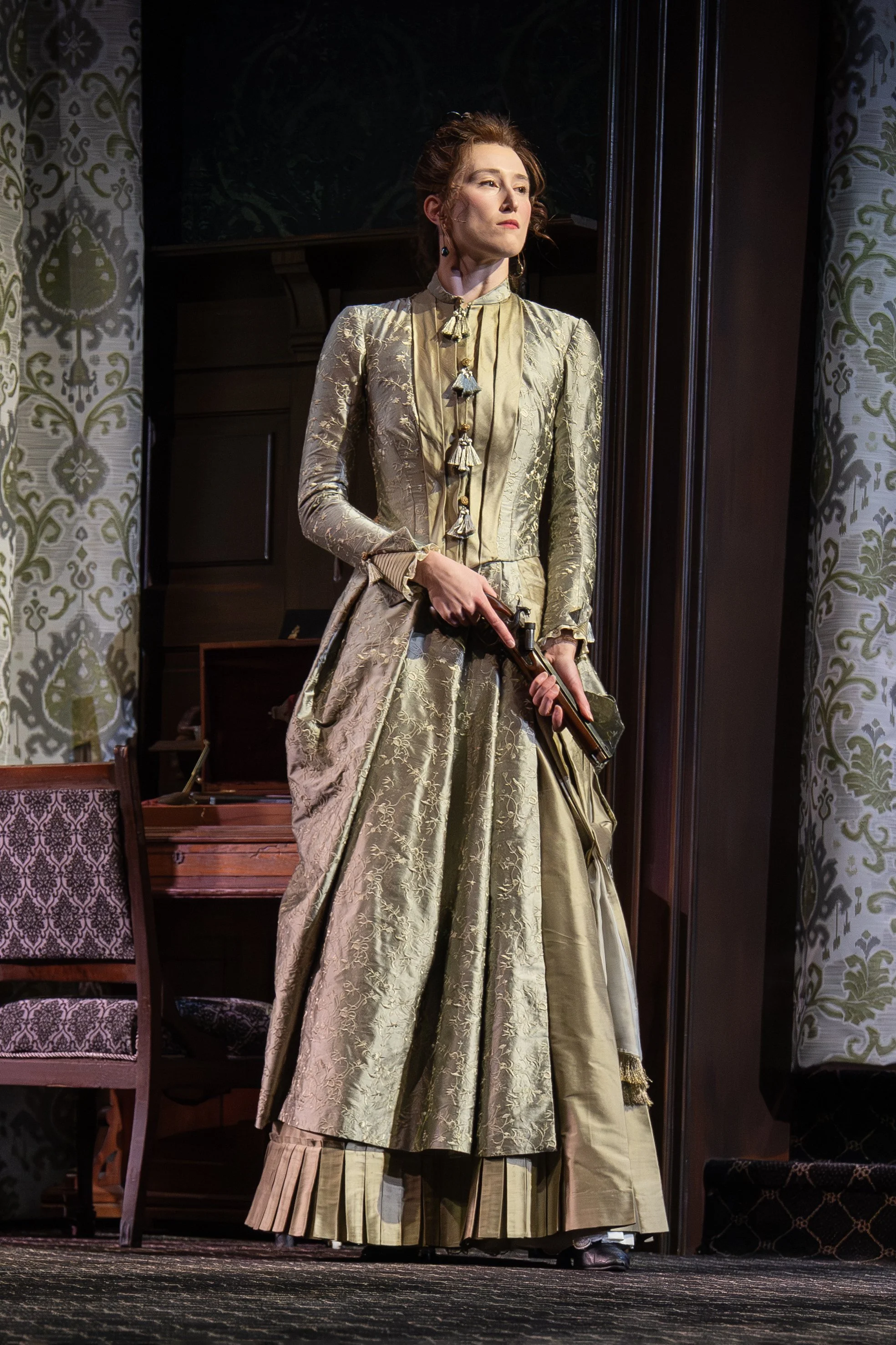
Scout Backus as Lucy Westenra in Dracula, Hartford Stage; photo by T. Charles Erickson
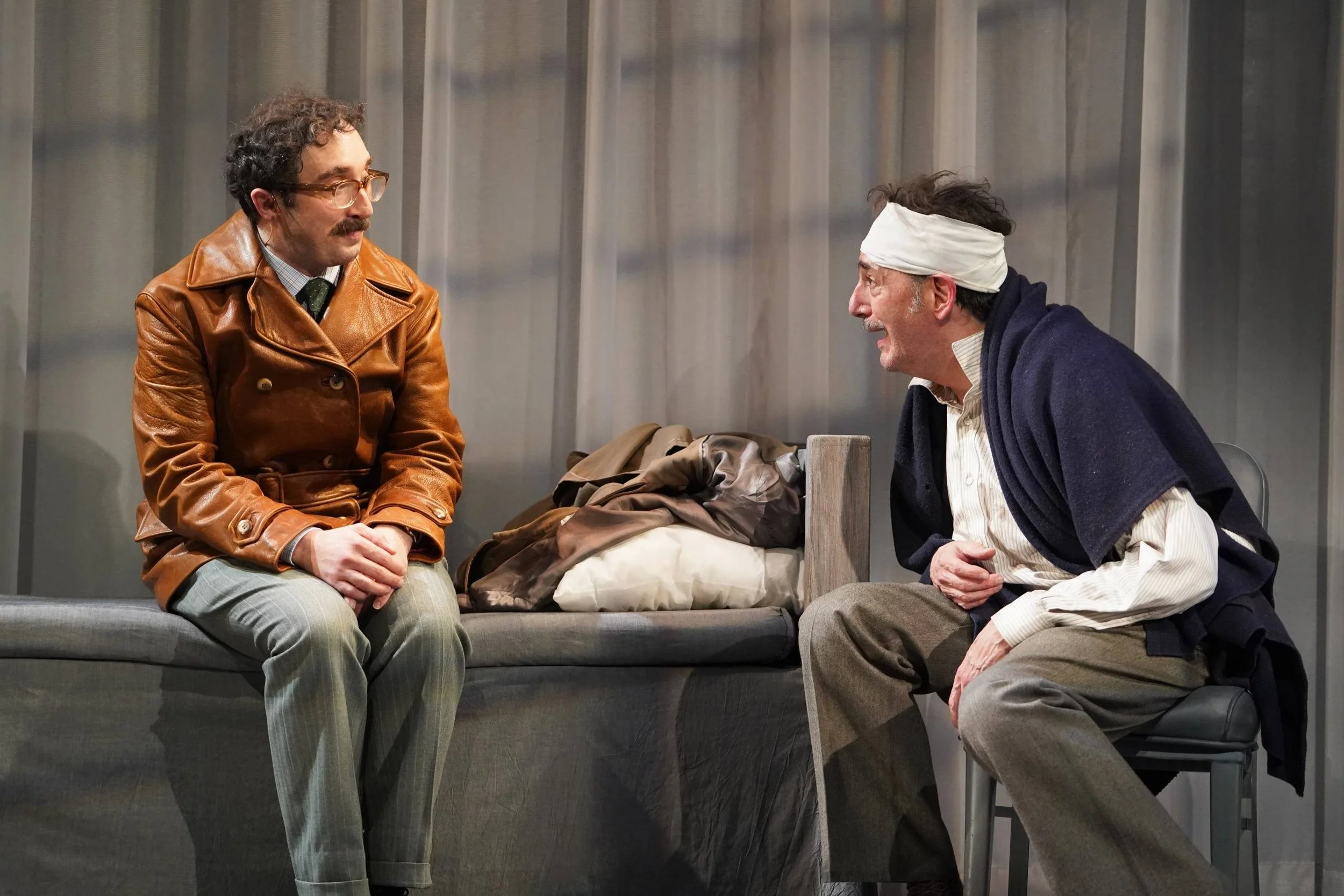
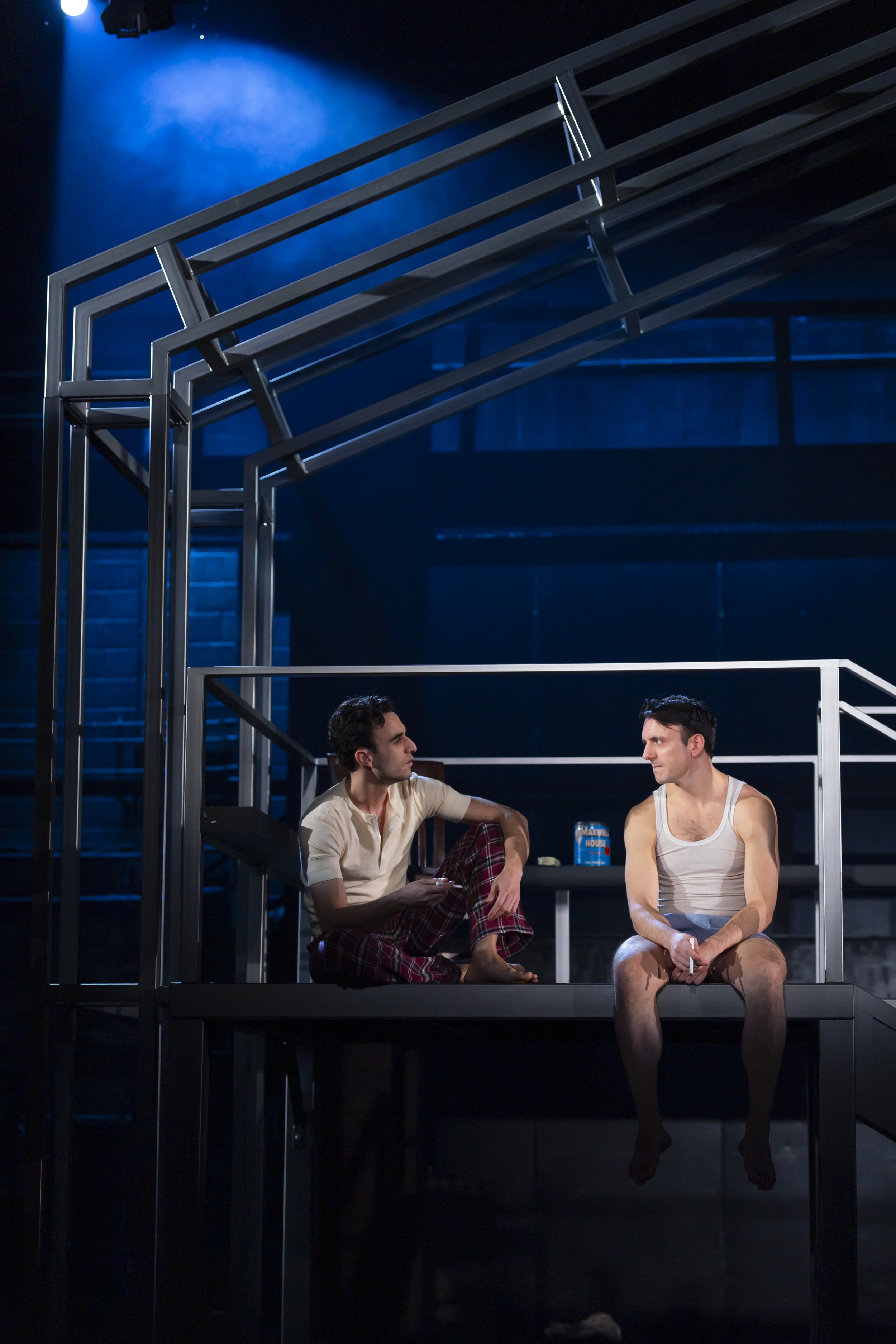
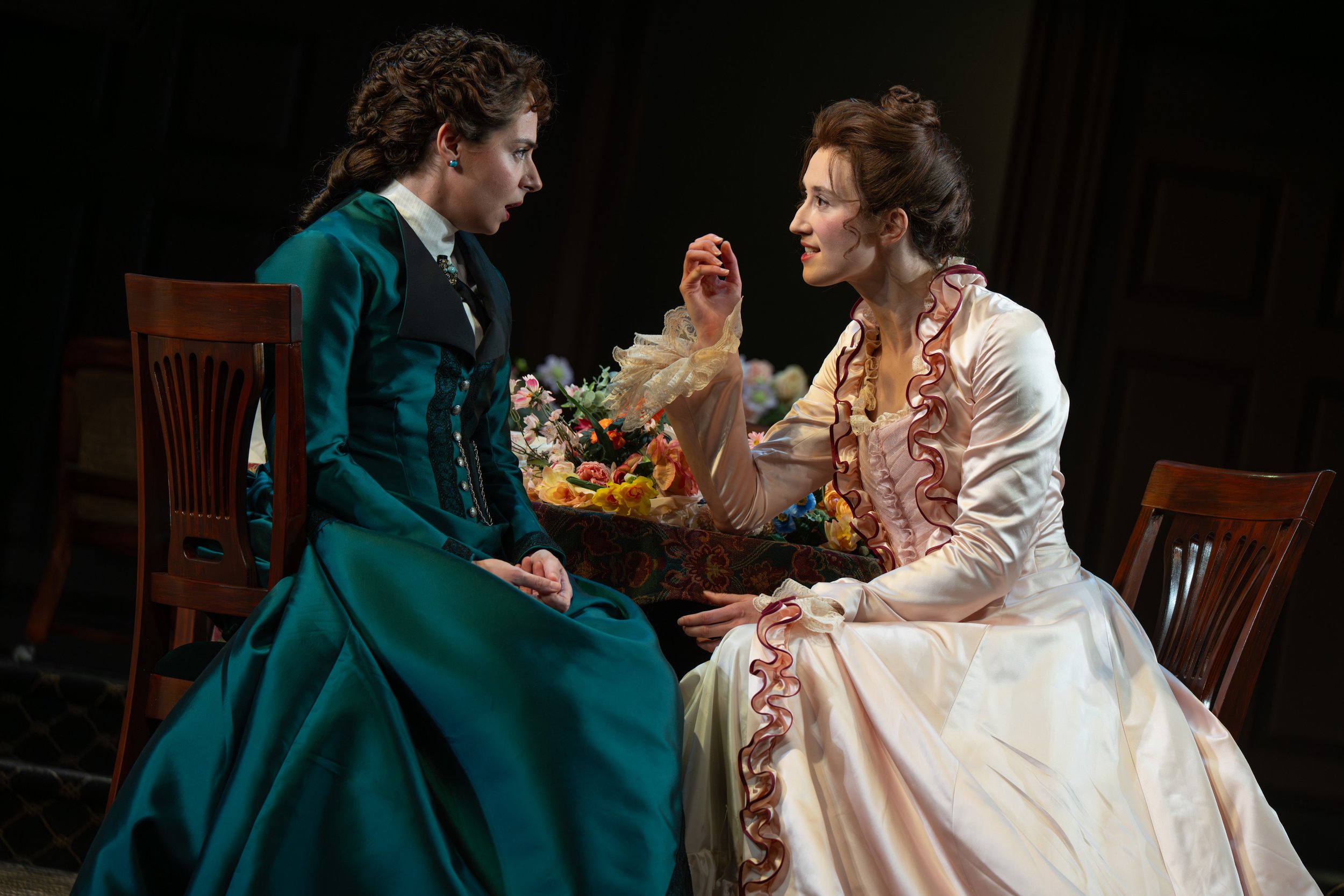
All of which might be a way of saying that this is Dracula as pastiche, pulling in anything deemed suitable—including Monty Pythonesque renderings of Grand Guignol effects. It's carnival, it's funhouse, it's a lecture, and three performances emerge from the farrago: first, Scout Backus delivers a truly riveting turn as Lucy transformed from bubbly would-be bride to heaving demon; Sara Gutierrez, saddled with delivering way too many explanatory speeches and hints on what we should think about what we're seeing, holds the proceedings together with a spirited delivery; to Lucas Dixon falls the task of playing a bewildered actor playing a stuffed shirt who also whimpers and cringes and eventually breaks the fourth wall so as to make us either feel sorry for him or for ourselves for being party to this.
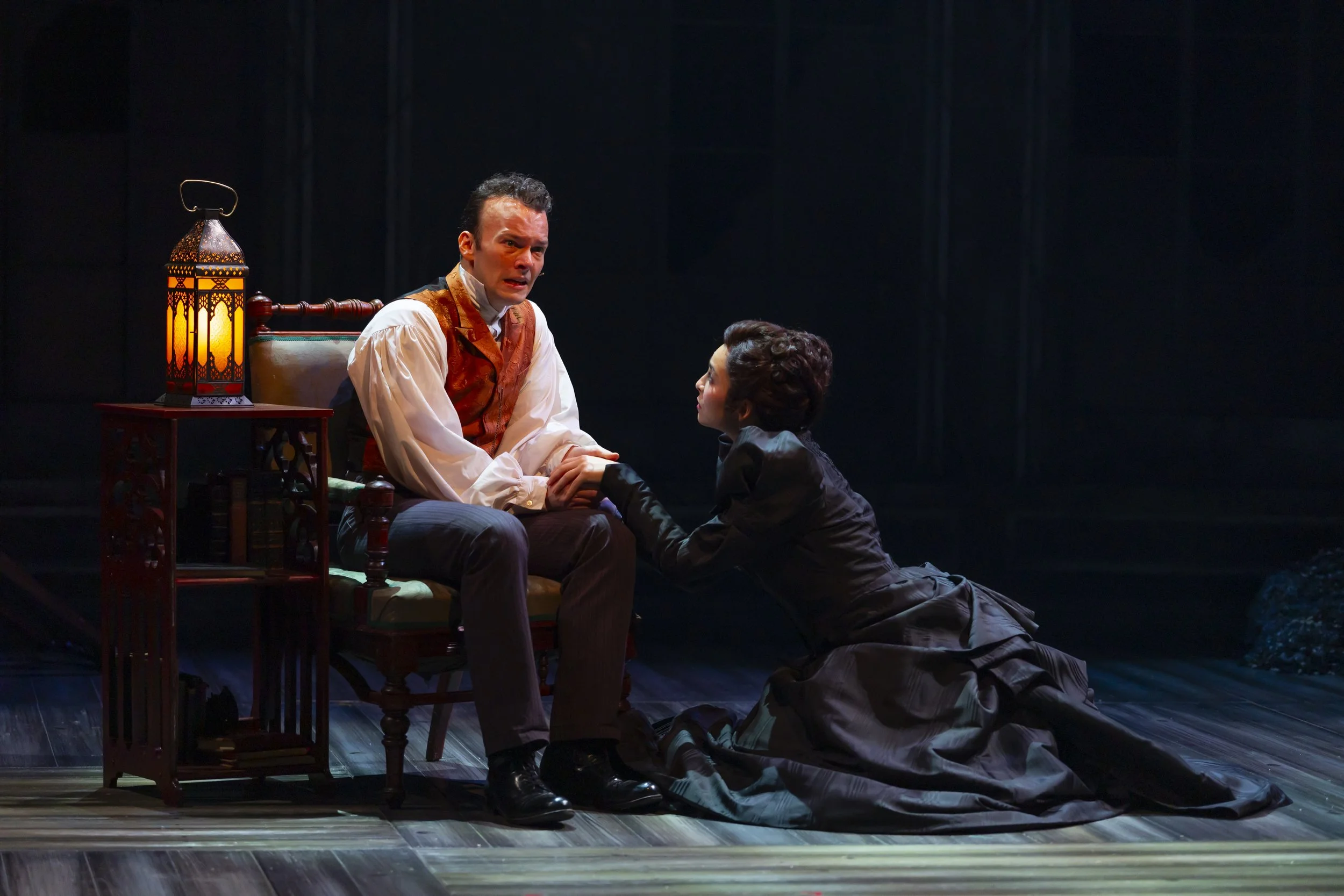
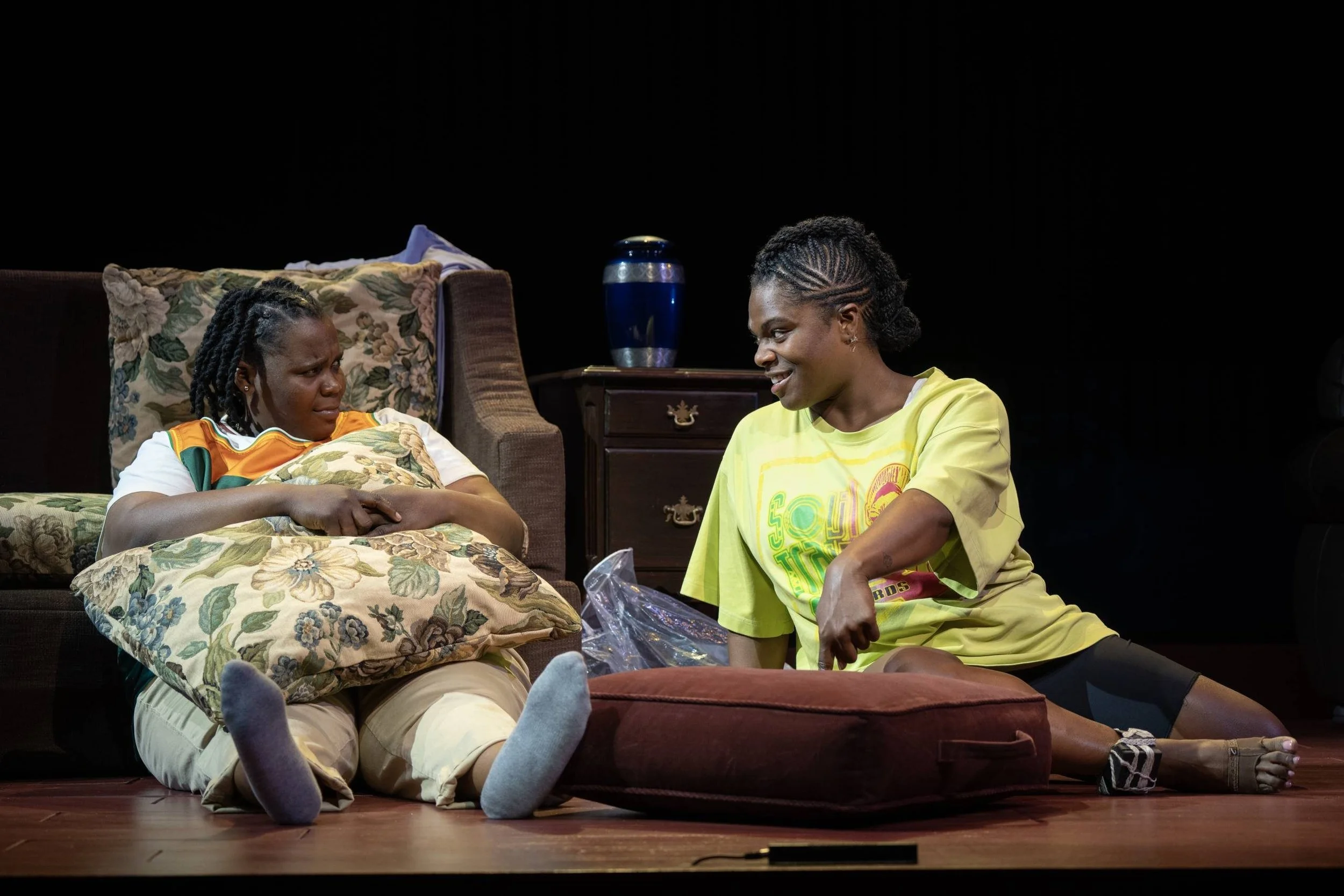
Lucas Dixon as Jonathan Harker, Sara Gutierrez as Mina Harker in Dracula, Hartford Stage; photo by T. Charles Erickson
Agitprop in favor of feminist solidarity and against the deprivations of male dominance certainly has a purpose. But why yoke it to Dracula? The notion that Lucy and Mina were would-be lovers demonized by male expectations and repressive scientism was part of feminist revision of the novel when taught in literature classes over twenty years ago (it's likely feminist reinterpretations brought the novel back into the canon in the first place). Even so, trying to heroicize those converted to the Count's form of "love" goes wildly awry, if one entertains any notion of what Dracula was conceived to mean.
In Stoker's version, the vampire is quite simply a figure for the utter perversion of the natural order—not as sexual analogy or gender identity, but as the will to live forever, no matter what monsters that would make of us, preying upon all other forms of life to keep "us" going. That goal is still vigorously sought after by certain elites and always will be. The further element—why all the crosses and holy water eschewed by this version—is that "everlasting life," according to Christian dogma, was something granted only in the hereafter, so to aim for it in "this world" is unholy and evil.
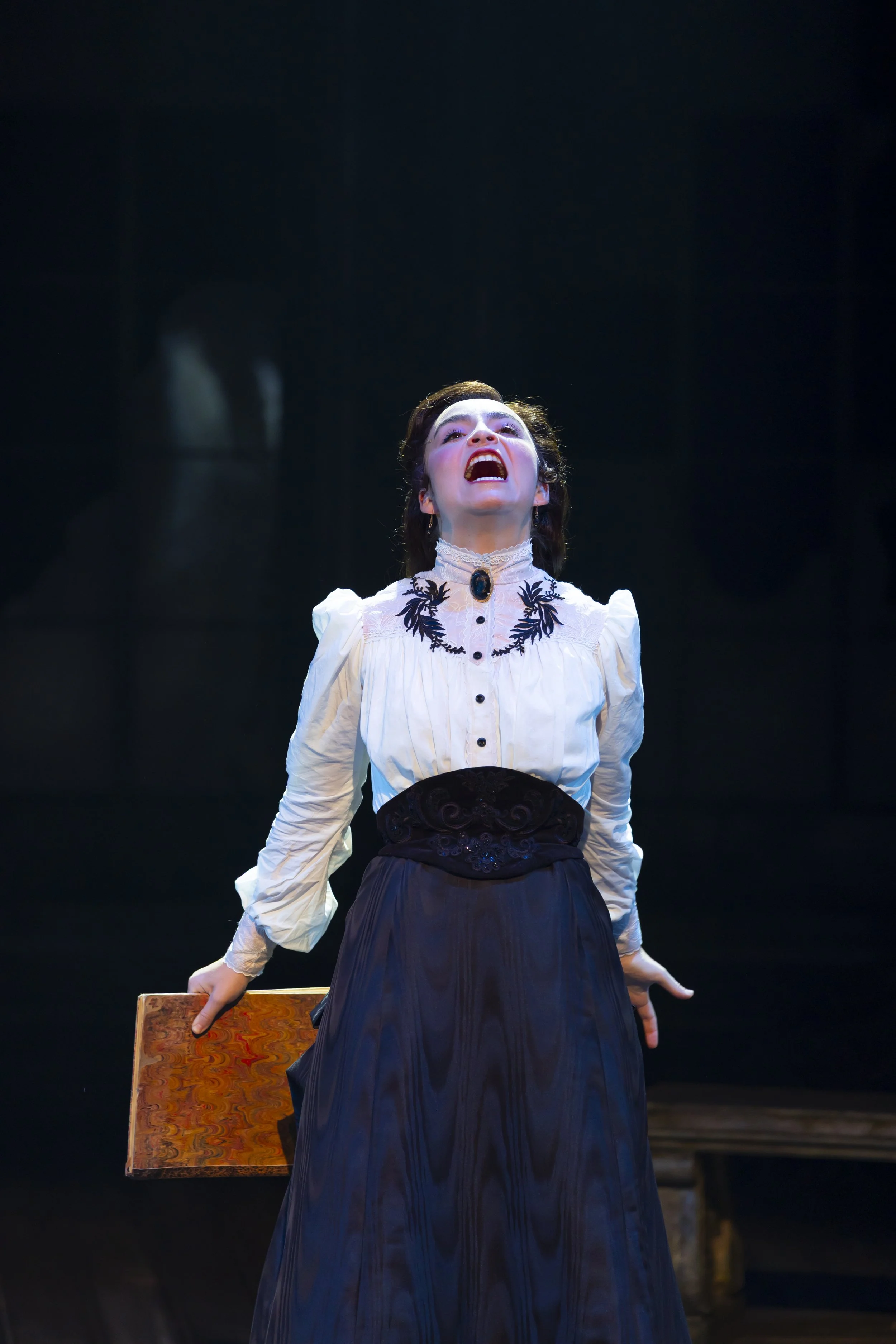
Sara Gutierrez as Mina Harker in Dracula, Hartford Stage; photo by T. Charles Erickson
Mina, in the end, becomes a new Robespierre, advocating a reign of terror in the name of all who have suffered at masculine hands. What drives the stake through the heart of this conceit is that the forces of good must align with the ghoulish undead. Though it pains me to say it, this Dracula is more dead than alive.
Dracula
By Bram Stoker
Adapted by Morgan Lloyd Malcolm
Directed by Jackson Gay
Scenic Design: Riw Rakkulchon; Costume Design: Fabian Fidel Aguilar; Lighting Design: Paul Whitaker; Sound Design: Caroline Eng; Wig, Hair & Make-up Design: Tommy Kurzman; Fight Director: Rod Kinter; Movement Coordinator: Shura Baryshnikov; Dialect & Voice Coach: Julie Foh; Casting: Alaine Alldaffer, CSA and Lisa Donadio; Production Stage Manager: Avery Trunko; Assistant Stage Manager: Theresa Stark; Director of Production: Bryan T. Holcombe; General Manager: Emily Van Scoy
Cast: Scout Backus, Caitlin Elizabeth Clouthier, Lucas Dixon, Anny Giobbe, Sara Gutierrez, Pauli
Hartford Stage
October 9-November 1, 2026